


![[*]](http://sepwww.stanford.edu/latex2html/cross_ref_motif.gif) and ).
For the elastic modeling I created s-wave velocities assuming a constant
Possion's ratio. The elastic modeling results are shown in Figures
and .
In both cases pressure sources were used and horizontal and vertical
displacement components were recorded on the surface.
and ).
For the elastic modeling I created s-wave velocities assuming a constant
Possion's ratio. The elastic modeling results are shown in Figures
and .
In both cases pressure sources were used and horizontal and vertical
displacement components were recorded on the surface.
Figure and compare the divergence
of both types of modeling. The divergence is computed from the wave field
components identically.
It clearly shows that as expected pure acoustic modeling cannot account for
mode converted waves. A realistic modeling of the earth should include mode
converted waves (p, sv and sh). Since mode conversions are absent in the
pure acoustic modeling, the amplitudes are different of even the ``primary''
waves. No energy is leaking into other modes, but stays within the p wave.
|
fig1
Figure 1 Marmousi subsurface velocity model. | 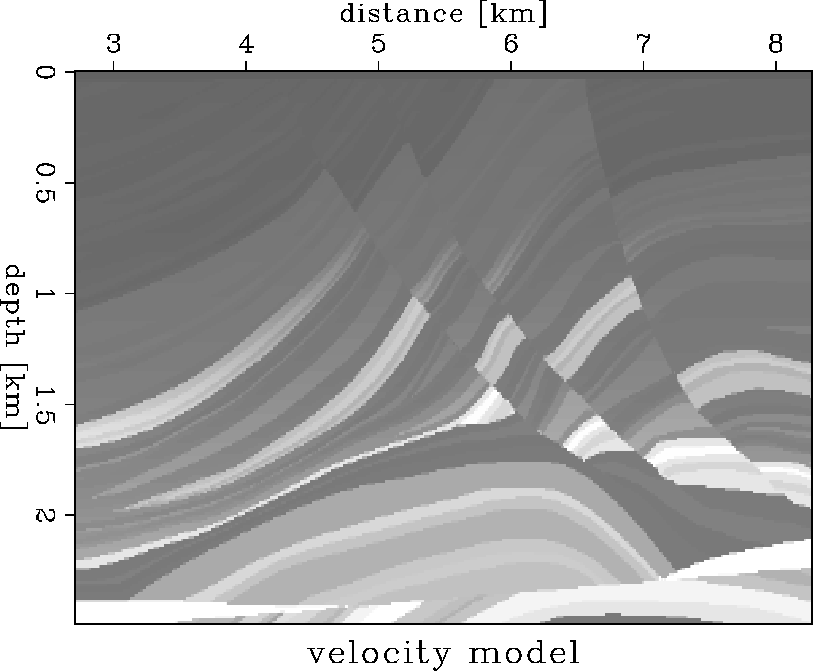 |

|
fig6
Figure 2 Elastic modeling with a pressure source recorded into a horizontal receiver. | 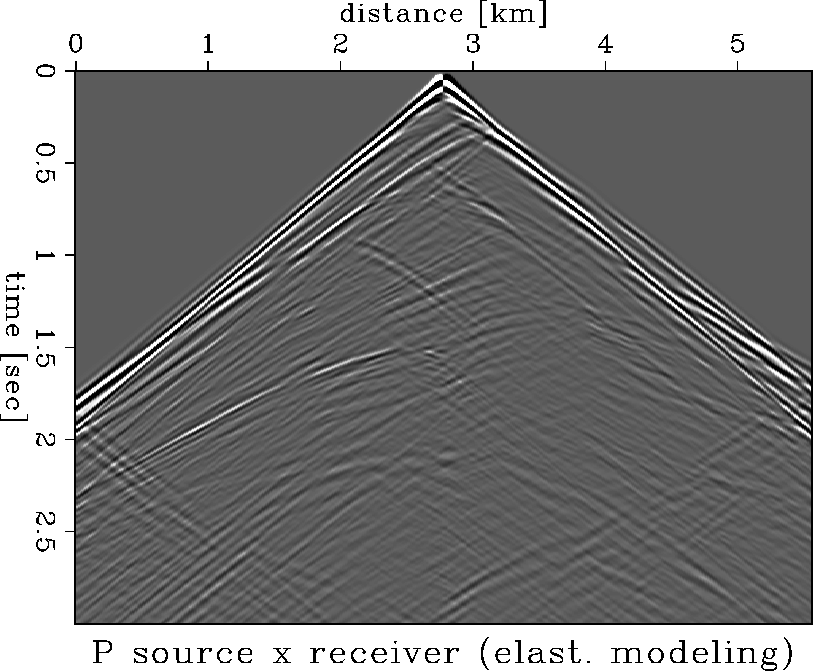 |
|
fig7
Figure 3 Elastic modeling with a pressure source recorded into a vertical receiver. | 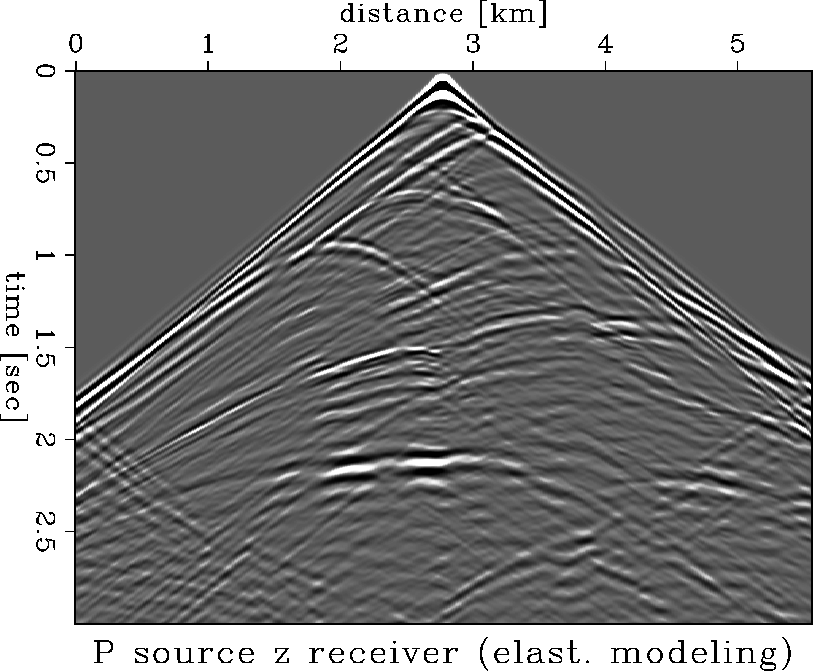 |
|
fig8
Figure 4 Acoustic modeling with a pressure source recorded into a horizontal receiver. | 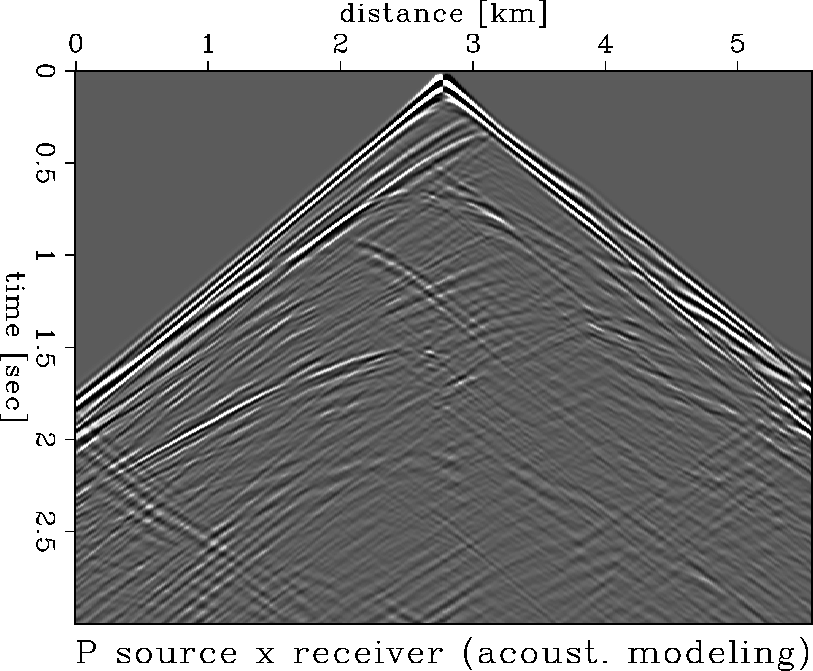 |
|
fig9
Figure 5 Acoustic modeling with a pressure source recorded into a vertical receiver. | 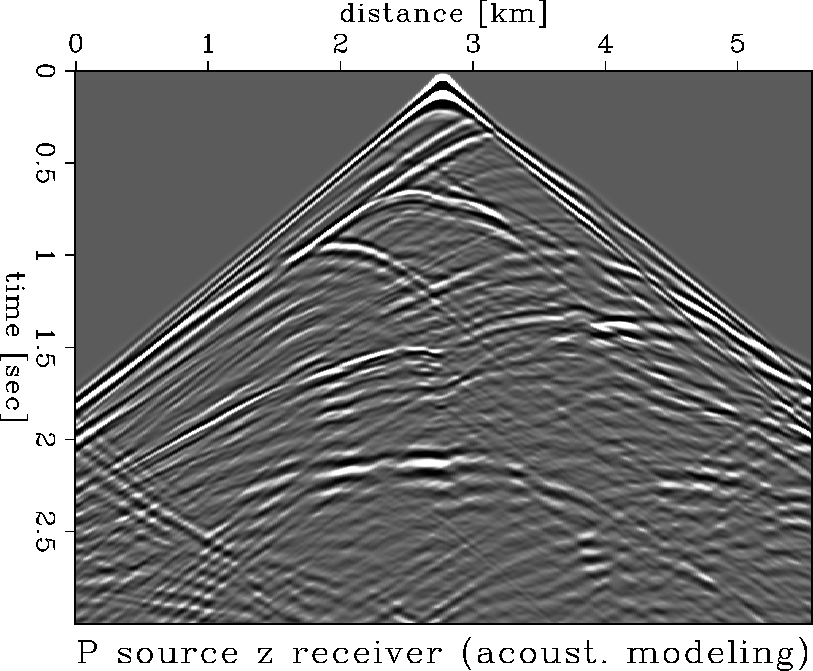 |
|
fig3
Figure 6 Divergence computed from elastic modeling schemes. There are mode converted waves. Compare it to the acoustic modeling. | 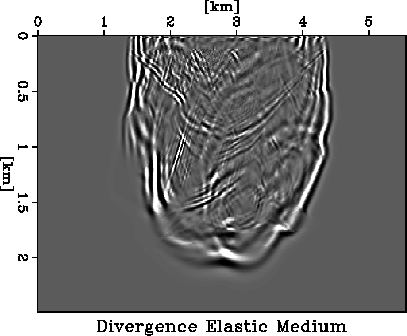 |
|
fig4
Figure 7 Divergence computed from acoustic modeling schemes. The acoustic modeling does not show mode converted waves.Compare it to the elastic modeling. | 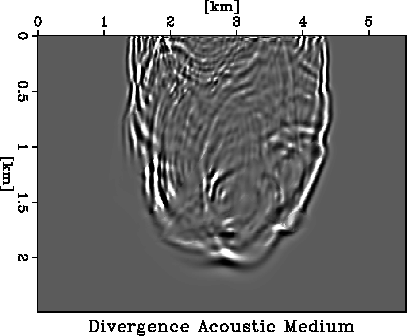 |