


 |

 |
 |
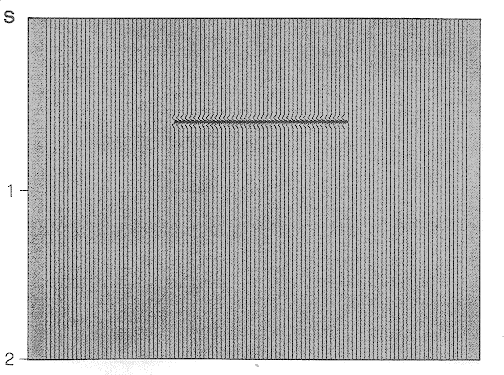
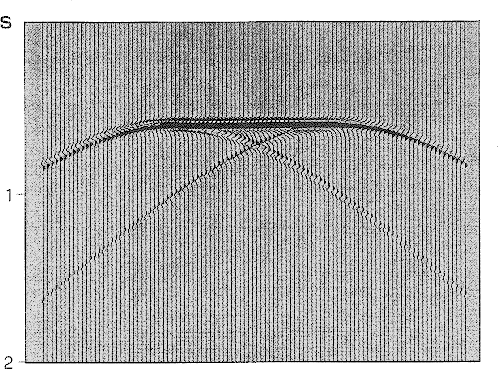
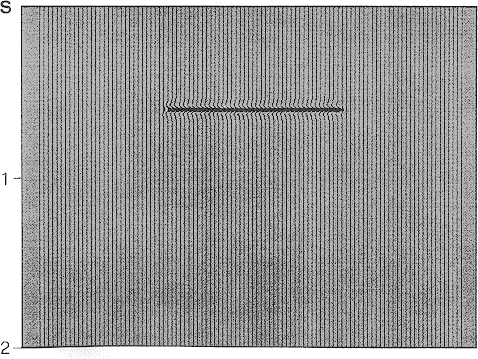
The zero-offset response shows that the reflected horizon remains unshifted in time. However the edges give rise to diffracted energy, and the ends of the reflector are now not so clearly defined. Figure 4 shows that migration successfully collapses the diffractions, and the edges of the horizon are once more shown to lie at their true lateral positions.
 |
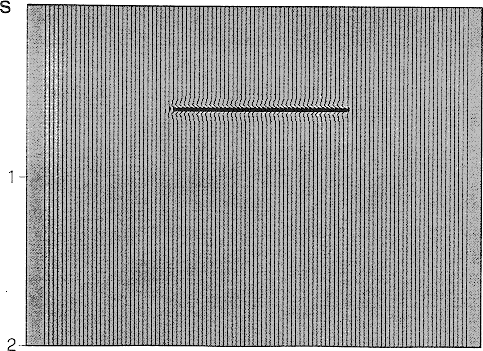 |
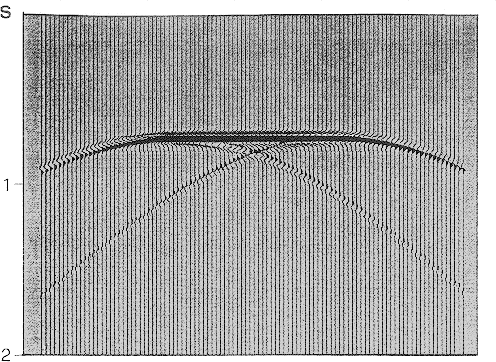
Referring to the common-offset seismic response in Figure 3 and comparing this section to the zero-offset response in Figure 2, the whole reflector is shifted down the section by a time interval which is determined by the source-receiver separation. It is also evident that seismic diffractions in nonzero-offset records behave in a similar way to those shown on zero-offset sections. Figure 5 shows the output migrated image. All points on the reflector have been correctly repositioned in time and space. Diffracted energy has been completely removed, and the lateral termination points of the horizon have been redefined accurately.