


We constructed a synthetic interval velocity model, and then modeled
a CMP gather using a finite difference code, Figure ![[*]](http://sepwww.stanford.edu/latex2html/cross_ref_motif.gif) .
We then picked RMS velocities and attempted to estimate our interval velocity.
As Figure shows, we did a very good job of recovering
the correct interval velocity.
.
We then picked RMS velocities and attempted to estimate our interval velocity.
As Figure shows, we did a very good job of recovering
the correct interval velocity.
|
synthetic-data
Figure 6 Modeled synthetic data. | 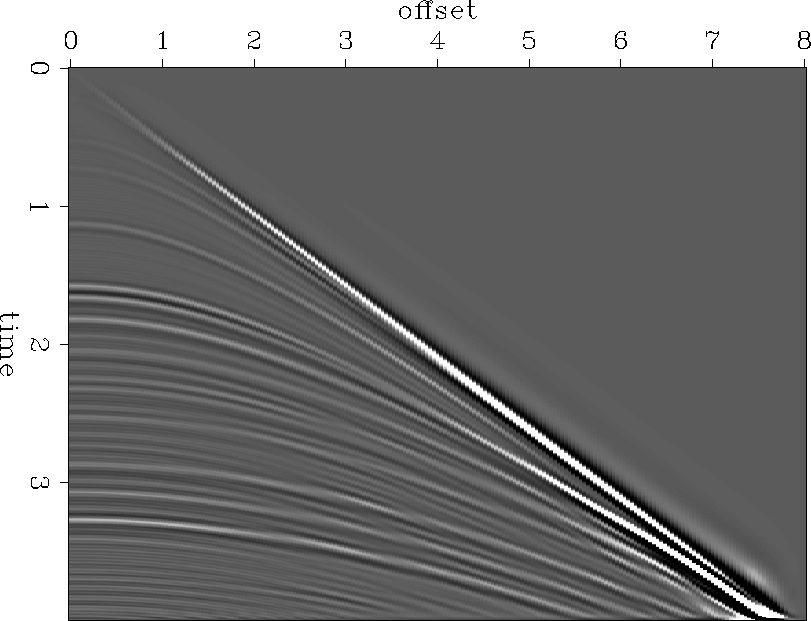 |
|
synthetic
Figure 7 Initial interval velocity, picked RMS curve, and inverted interval velocity curve. | 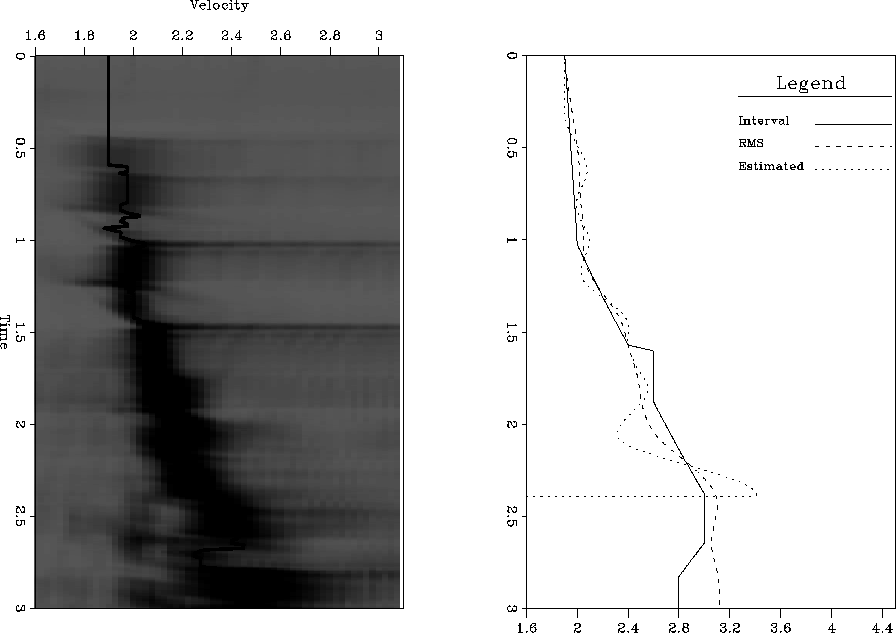 |


Using the same dataset (Figure ) we introduced some
low-energy noise to our velocity scan and then attempted to invert back
to our interval velocities. As Figure shows, even with the grossly
inaccurate RMS picks at approximately 1.5 seconds we were still able
to recover a reasonable interval velocity curve.
|
gap
Figure 8 Left panel, RMS picks overlaying semblance scan with noise introduced at approximately 1.5 seconds. Right panel, the resulting interval velocity curve, the curve without the bad data, and our bad-data RMS curve. | 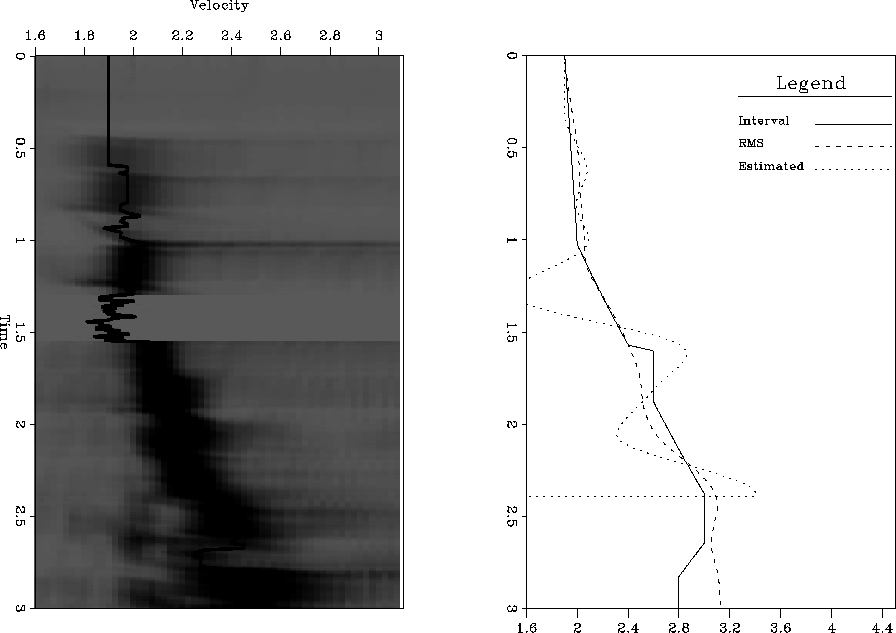 |
 ) to be white Nash and Sofer (1996).
Not surprisingly the preconditioned variable for this
problem is not quite zero-mean. Velocity
generally increases with depth, which means the slope of velocity will on
average be greater than one. Considering the limited resolution of the seismic
method, it is not surprising that our preconditioned variable does not
meet the second whiteness criteria either.
) to be white Nash and Sofer (1996).
Not surprisingly the preconditioned variable for this
problem is not quite zero-mean. Velocity
generally increases with depth, which means the slope of velocity will on
average be greater than one. Considering the limited resolution of the seismic
method, it is not surprising that our preconditioned variable does not
meet the second whiteness criteria either.
|
xvals
Figure 9 Our preconditioned variable for the continuous case. | 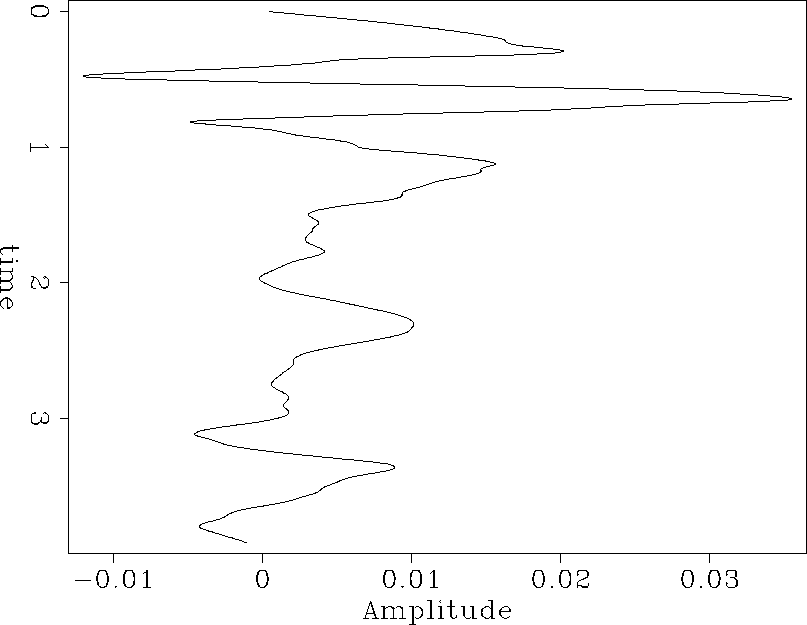 |