Next: Conclusion
Up: Coherent noise attenuation results
Previous: Attenuation of ground-roll
We use the very popular Gulf of Mexico line provided by WesternGeco.
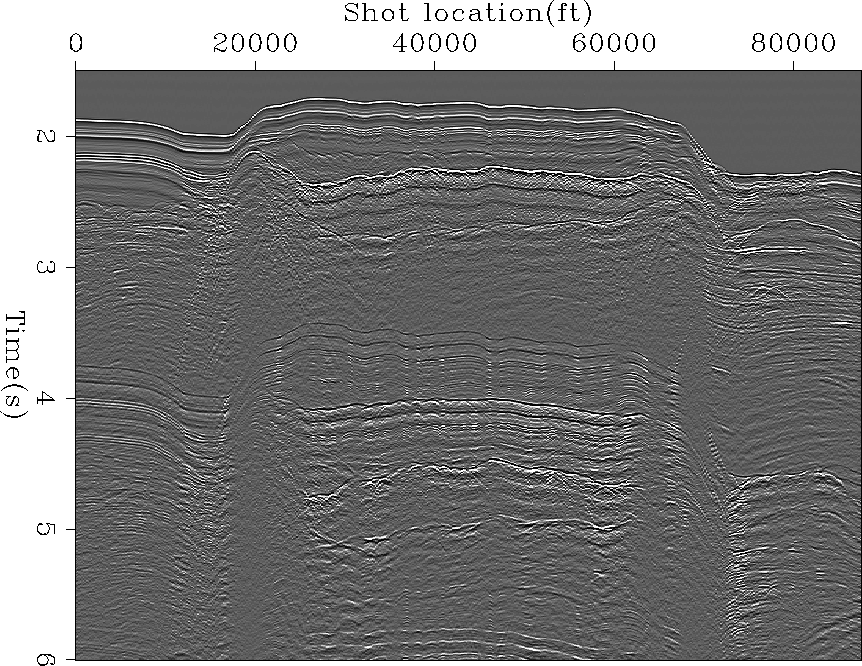
In the middle of the seismic section shown in Figure
4, the data contain a shallow salt body which
generates strong reverberations and diffractions.
This dataset is frequently utilized to benchmark multiple attenuation
techniques.
The multiple model was calculated in the shot domain using a
non-recursive version of the SRME technique developed
by Delft Verschuur et al. (1992).
We describe how we created the multiple model in the appendix A [equation
(16)]. In few words, the goal of our modeling
algorithm is to generate a kinematically correct multiple field. Therefore,
there is no attempt to compensate for source signature
effects. Indeed, our hope is that the attenuation scheme is robust enough to cope
with significant amplitude errors in the multiple model.
zero-offset
Figure 4 Zero-offset section
of the Gulf of Mexico data showing strong water-column multiples
below 3.5 seconds.


 comp
comp
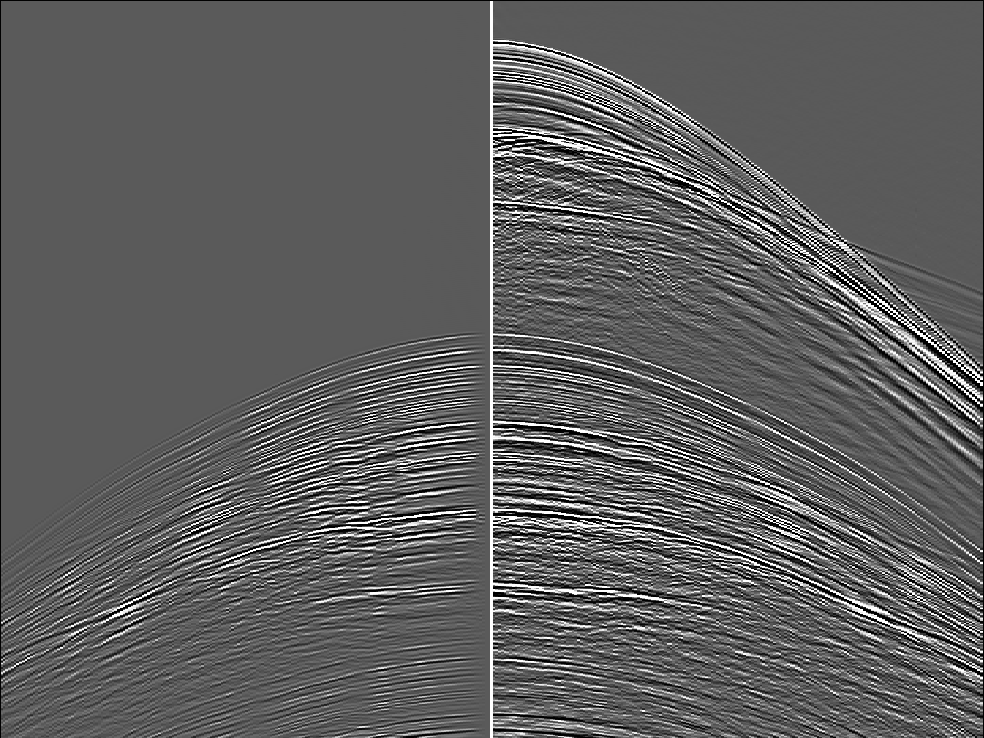
Figure 5 Left: A multiple
model at one shot location. Right: The shot record at the same
location. The multiple model matches the recorded multiples
accurately.
Figure 5 shows a comparison between one recorded shot
gather on the right, and the multiple model for the same shot location
on the left. This shot is taken at the vertical of the salt body.
The kinematics of the input data, displayed in the right-hand panel of
Figure 5, are accurately reproduced in the multiple model
(left-hand panel of Figure 5).
The missing energy at near offset in the
multiple model results from the lack of short offset traces.
Out-of-plane effects might affect the accuracy of the
model considerably. In addition, the limited aperture of the recording geometry
may cause modeling problems when dipping beds are present in the subsurface
Guitton (1999).
The multiple prediction is done in the shot domain, but our multiple
attenuation scheme was tested in the CMP domain. The next two
sections present multiple attenuation results for one CMP gather
outside the salt boundaries and one over the salt body.
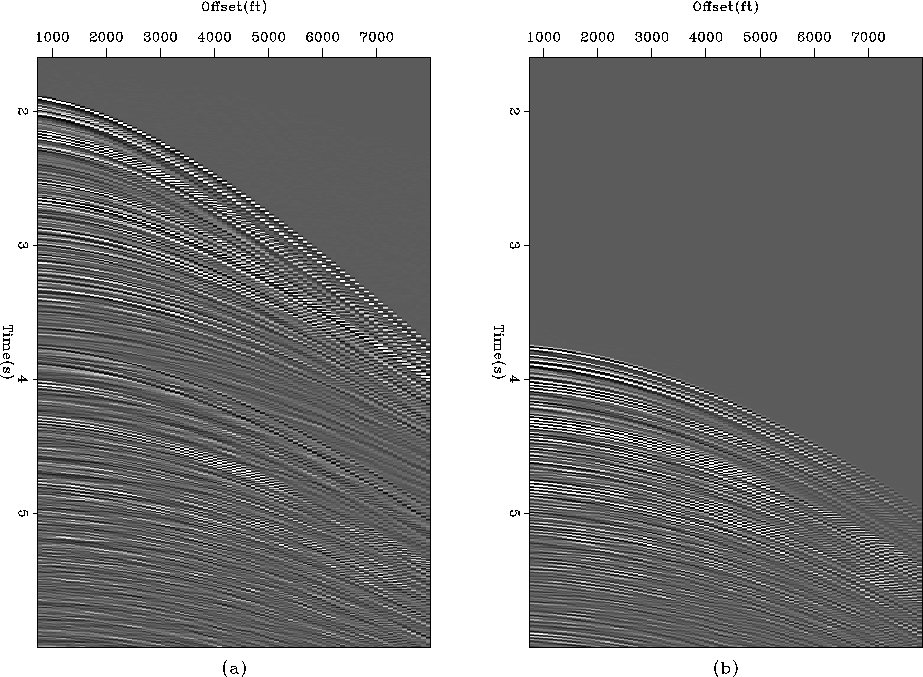
Figure 6a shows a CMP gather
extracted from the Gulf of Mexico dataset, outside the salt
boundaries, and infested with multiples. Figure
6b shows the multiple model at the same location.
The main patterns are accurately modeled but the relative amplitudes
of high-order multiples are not preserved. The multiple attenuation
starts by estimating the PEF for the data and the noise model.
The PEF coefficients are then smoothed along radial directions to
stabilize their inversion Clapp et al. (1999).
Then, the noise attenuation begins with either
equation (2), for the Wiener-like method,
or equation (4), for the subtraction scheme.
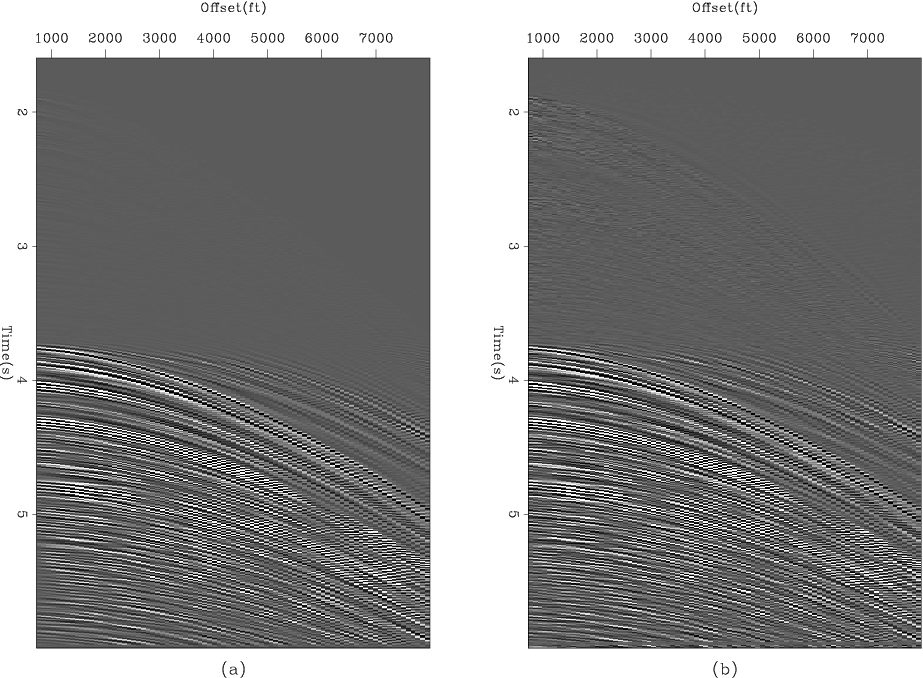
Figure 7 displays the result of the
multiple attenuation using both methods. The multiples have been
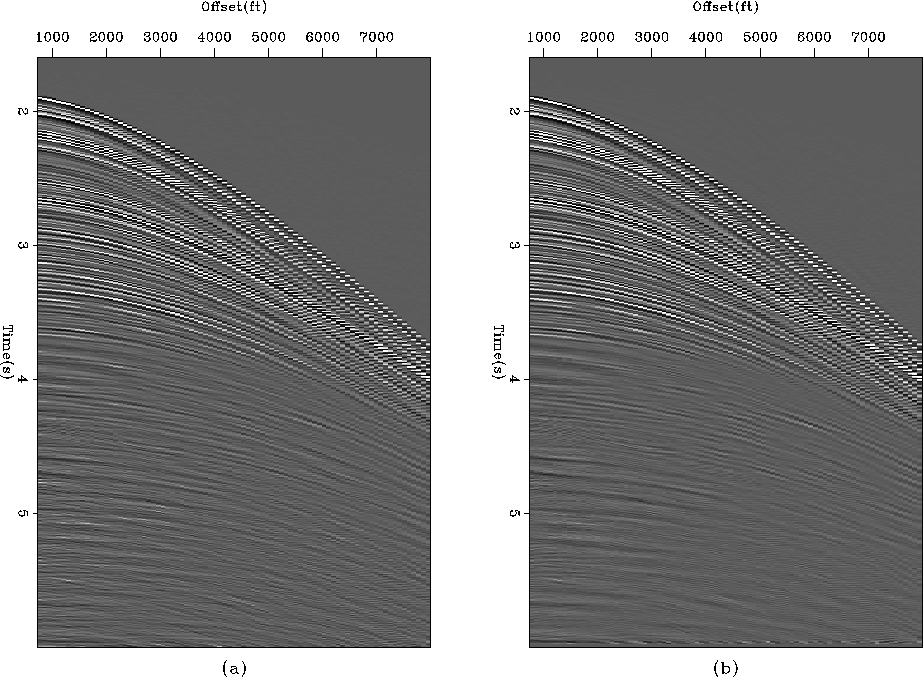
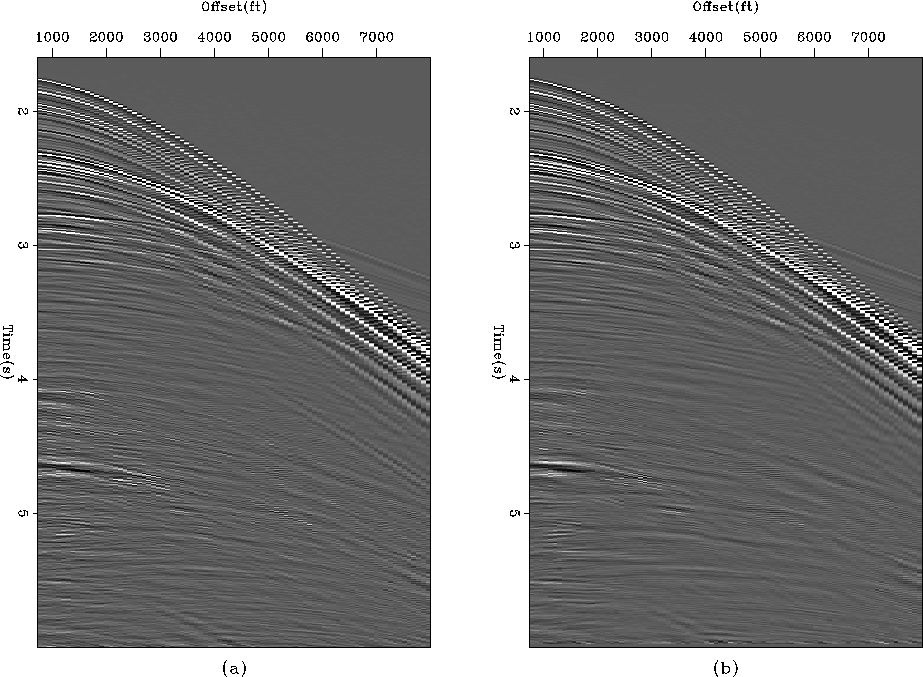
correctly attenuated in the two cases. Figure 8
shows the difference between the input data and the multiple-free
gather using both methods. The two noise attenuation schemes
lead to very similar results.
For the last multiple attenuation result of this paper, we extracted
a CMP gather over the salt body. Multiple
attenuation becomes more challenging because the salt body
generates strong internal multiples, diffractions and shadow zones
that are difficult to incorporate in the noise model.
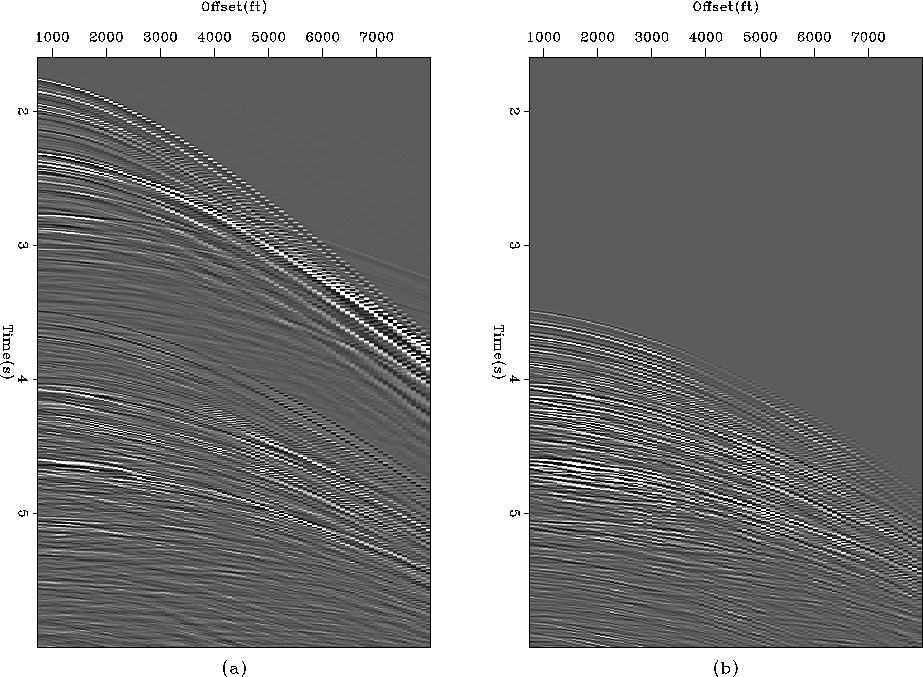
Figure 9 shows the selected CMP gather inside the salt
boundaries with the corresponding multiple model. Despite the inherent
difficulty of modeling subsalt multiples, the kinematics of the
multiples in Figure 9a look similar to those
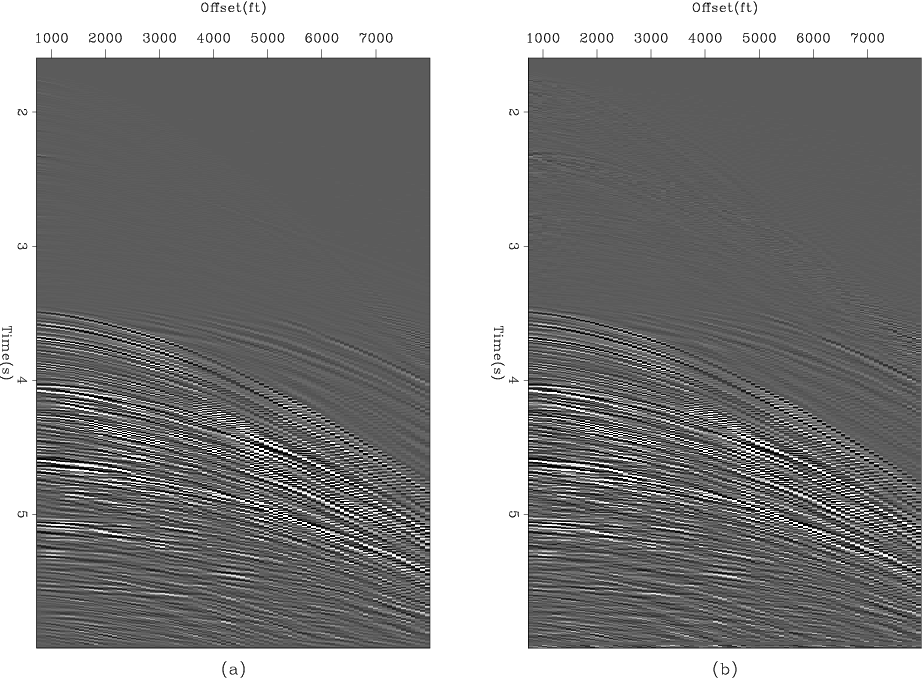
in Figure 9b. Figure 10 shows the
estimated signal. As expected, the remaining signal is less coherent
inside the salt boundaries than outside. Nonetheless, the two schemes
reveal hidden information in a similar way. Figure 11
proves that once again, the coherent noise attenuation is comparable
for both methods.
inp-1
Figure 6 (a) A CMP gather infested
with multiples, outside the salt boundaries. (b) The multiple model at the
same location.
sig-1
Figure 7 (a) The estimated signal using
the subtraction method. (b) The estimated signal using the Wiener-like
method. Both results are comparable.
noiz-1
Figure 8 (a) The extracted multiples
using the subtraction method. (b) The extracted multiples
using the Wiener-like method. The noise attenuation is similar in both
cases.
inp-400
Figure 9 (a) A CMP gather infested
with multiples, inside the salt boundaries. (b) The multiple model at the
same location.
sig-400
Figure 10 (a) The estimated signal using
the subtraction method. (b) The estimated signal using the Wiener-like
method.
noiz-400
Figure 11 (a) The extracted multiples
using the subtraction method. (b) The extracted multiples
using the Wiener-like method.
Next: Conclusion
Up: Coherent noise attenuation results
Previous: Attenuation of ground-roll
Stanford Exploration Project
4/29/2001