


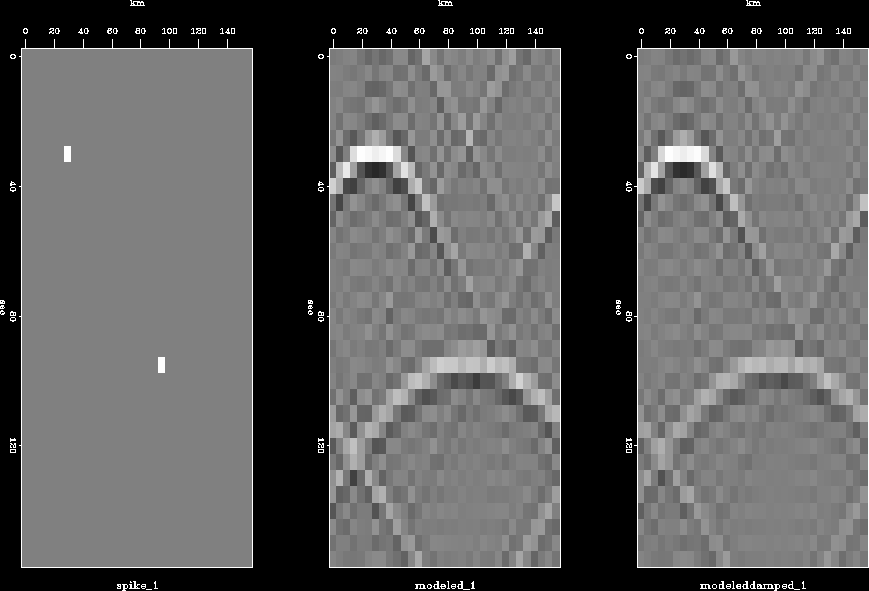
Figure 2 shows from left to right: a two-spike synthetic model,
modeling with equations (1) and (2). It is possible to
observe the decay of amplitude (energy) with respect to time when we include
the damping factor ( ) in our modeling equation. The same effect is
observable in Figure 3, which shows the migration
results using the results of Figure 2.
) in our modeling equation. The same effect is
observable in Figure 3, which shows the migration
results using the results of Figure 2.
 |
 ; modeling
with
; modeling
with 


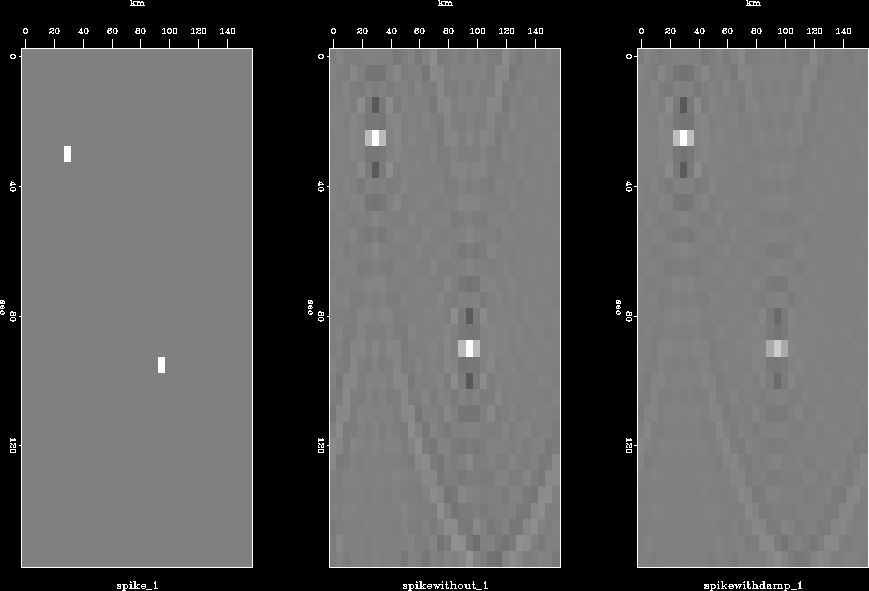 |
;results with
The energy decay is a function of the damping factor (). Figure 4
presents experimental results of the energy variability with respect to .The experiment consists of modeling and migration of the two-spike model with
equation (2) for different values of .Each sample in the plot (Figure 4) represents the energy of
each modeling-migration result for ranging between 0.002
and 0.04 every 0.002. It is possible to observe that
the energy decays exponentially with respect to the damping factor; this
decrease is due to the omission of causality in the
redefinition of ikz.
|
energy
Figure 4 Energy decay with respect to the damping factor | 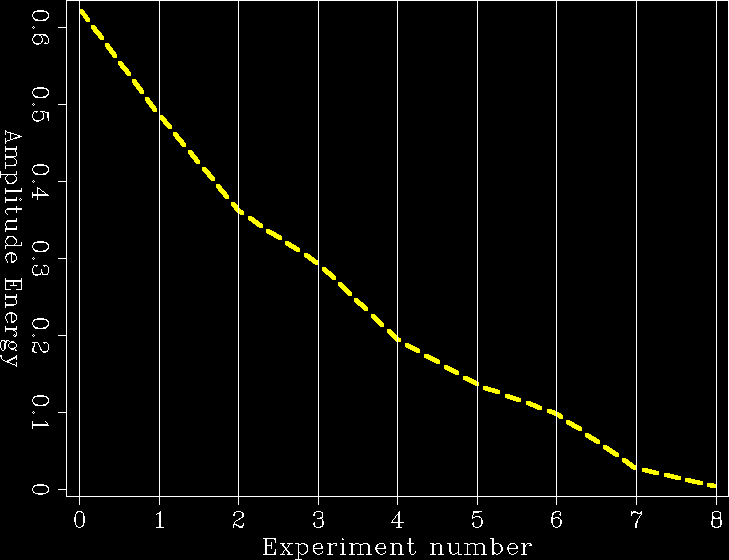 |
For comparison, Figure 5 shows three results of the experimental procedure described before. It is possible to observe that the bigger the damping factor, the less energy is present in the final result.
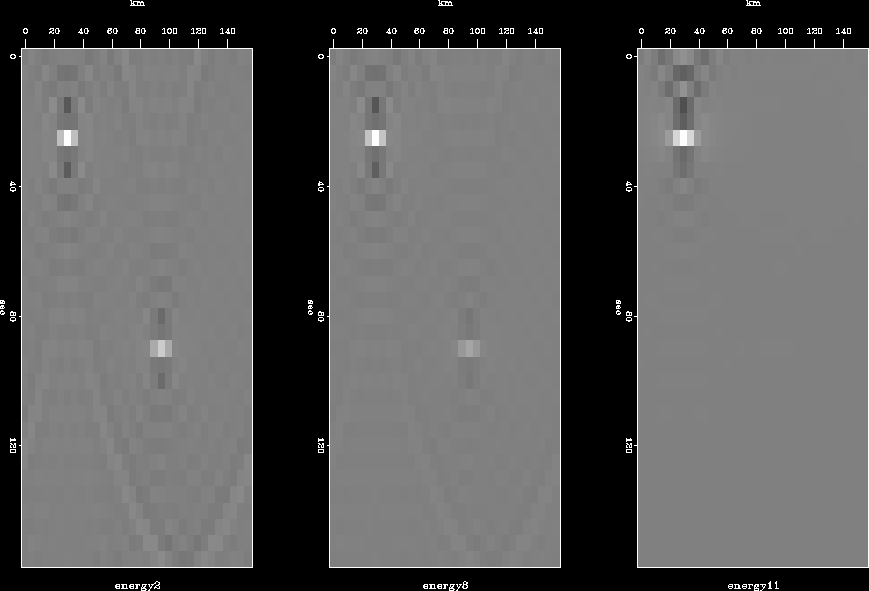 |
for the original model, right with
 , center
  , left