


The elastic synthetic data used for this study is provided by BP Gratwick (2000). A benefit of using the synthetic is that we know the density, S-wave velocity, and P-wave velocity functions used to create the data. These three parameters can give both an AVO intercept (A) panel and AVO gradient (B) panel, using equations (1), (2), and (3). Multiplying the two panels together gives the expected A*B response of the migrated image (Figure 7). Areas of the model that have a Class III anomaly should show up as the same color (white) in the image and at the same locations.
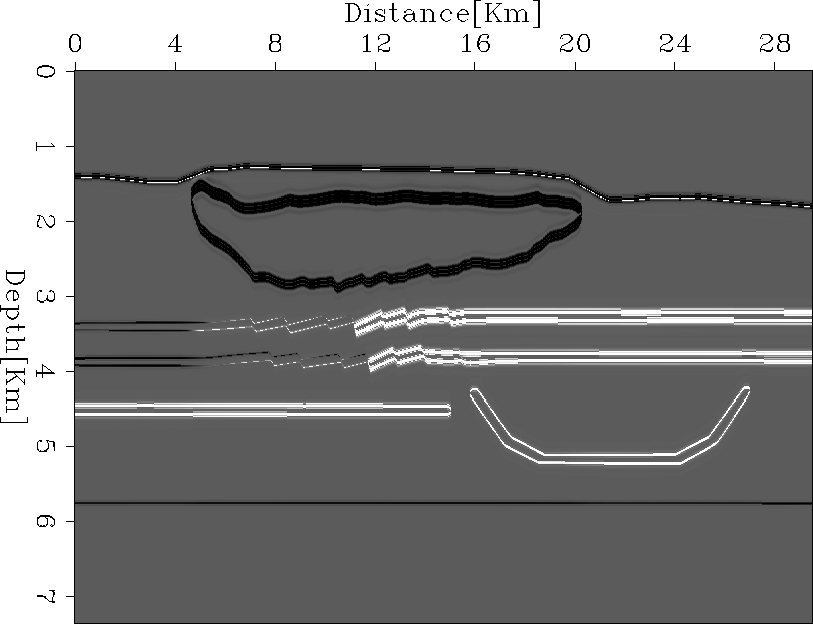 |
 models. (Note: white denotes high A*B
value, or Class III AVO anomaly) The model has a salt body (2-3 km depth, 4-20 km distance)
and a channel structure (4-5 km depth, 16-28 km distance).
models. (Note: white denotes high A*B
value, or Class III AVO anomaly) The model has a salt body (2-3 km depth, 4-20 km distance)
and a channel structure (4-5 km depth, 16-28 km distance).


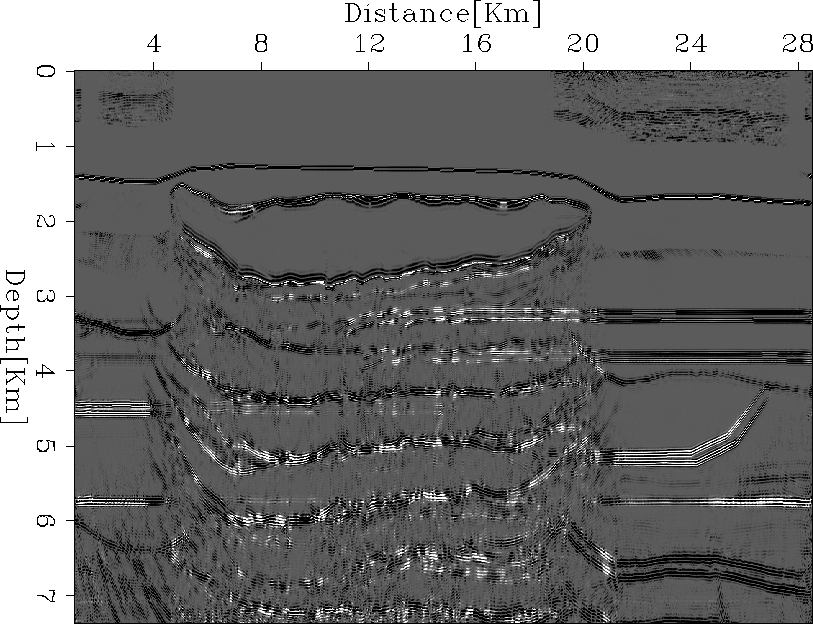 |
The initial (no mute) A*B of the image is seen in Figure 8. Overall, the image is comparable to the model but there are two notable problems:
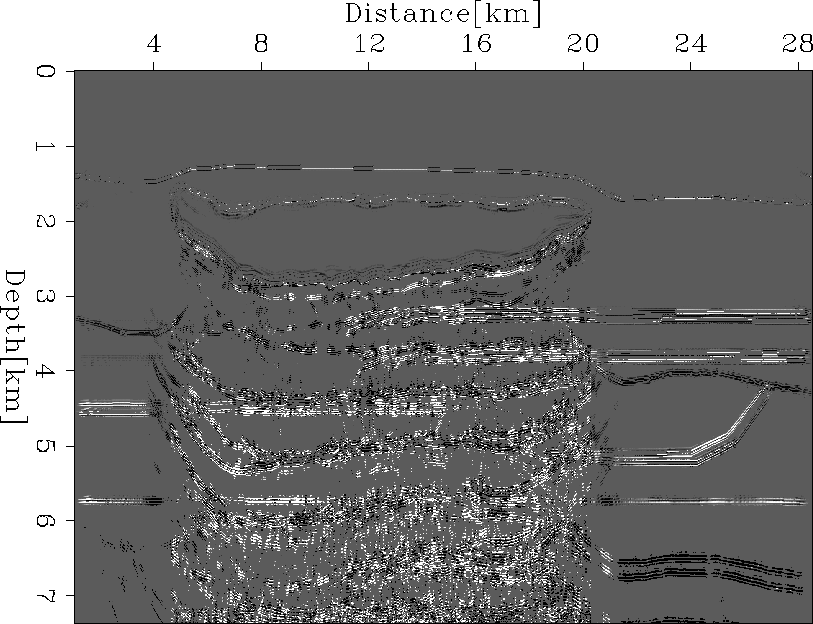
To account for the problems with the low energy, the AVA muting algorithm described in the previous section was implemented. Figure 9 shows the result of the mute applied to all areas of the image at once (all image points were plotted at the same time). The hydrocarbon layers below the salt are much more clear, and even parts of the left flank of the channel can be seen easier.
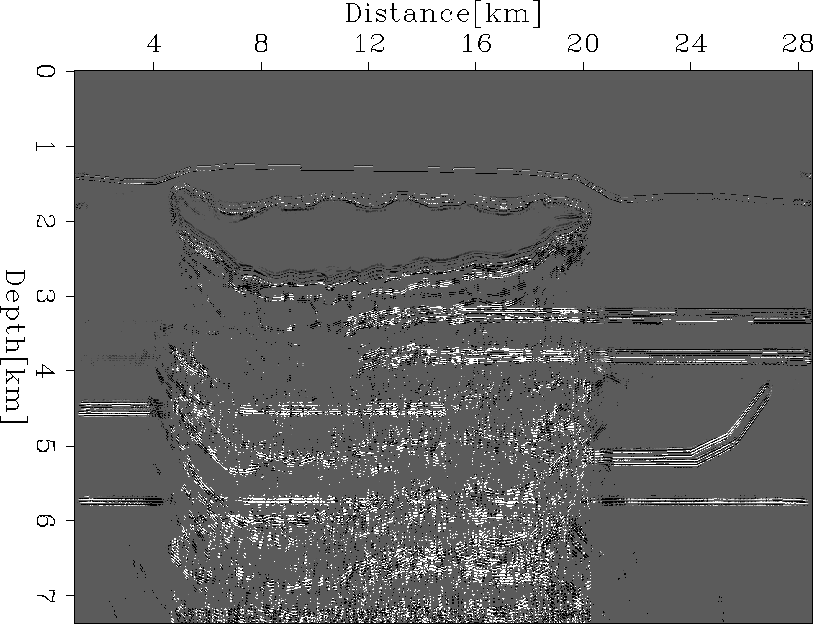
To account for problems with multiple energy, a multiple suppression technique introduced by Rickett et al. (2001) was used along with the AVA mute algorithm. This technique is designed to reduce energy from surface multiples; in this case from the water bottom and from the top and bottom of the salt. The multiple suppression worked well to resolve the sand lens at 4.5 km under the salt, but still internal salt multiples corrupted events near the base of the salt (Figure 10).
 |
 |