Next: Conclusions and plans
Up: Results
Previous: Synthetic data
We applied our preconditioning method
to a 2-D line from the 3-D Elf North Sea dataset. The results
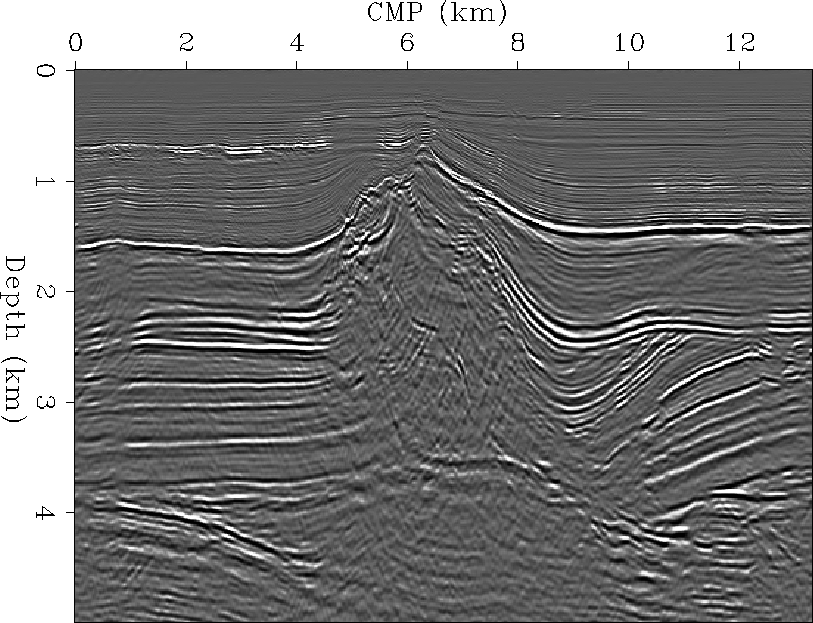
are encouraging. Figure 11 is the
migrated stack of the 2-D line. Figure 13
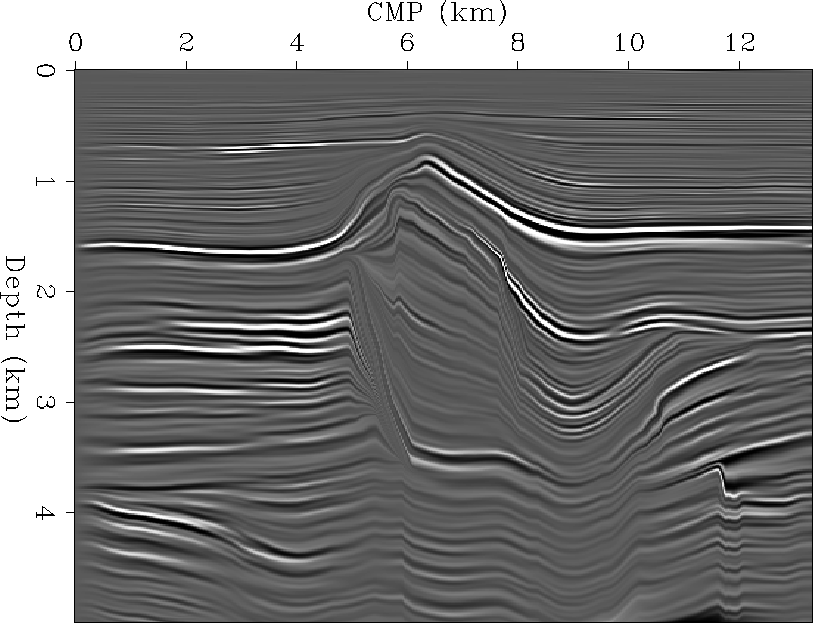
is the result of 1 iteration of the preconditioned inversion.
Note the the inversion result is lower frequency than the
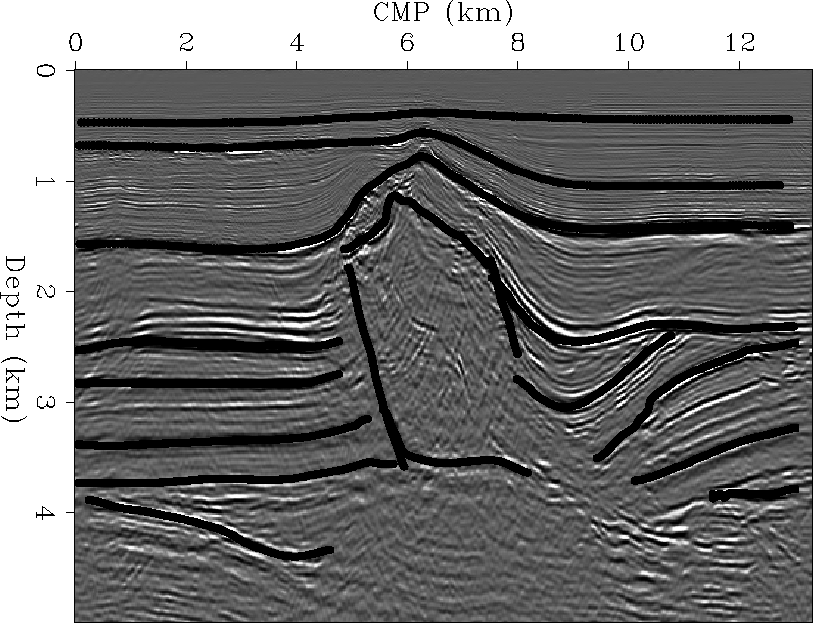
migration. Also, by comparing the inversion result with the
picked reflectors (Figure 12) we can see that
the smoothing is too strong and may smooth poorly where there
are no reflectors picked. Overall, the result looks too
artificial.
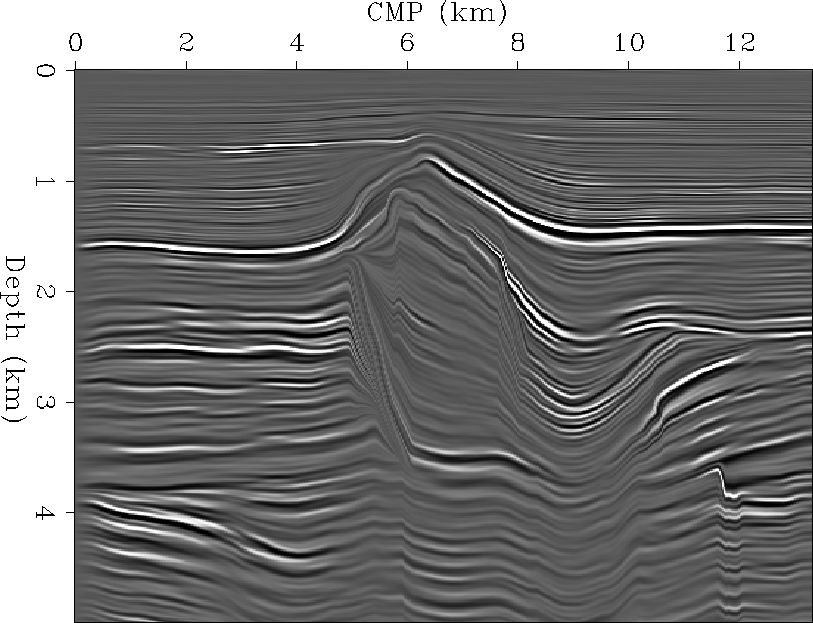
Performing more iterations helps to increase the frequency
content of the inversion result. Figure 14
shows the result of five iterations. Although it is higher
frequency than Figure 13, it still looks
artificial.
mig.stack
Figure 11 Stacked migration


 overlay
Figure 12 Stacked migration with picked
reflectors. Dip penalty filters smooth along a dip field
created from the picked reflectors.
prec.1iter
Figure 13 Zero angle panel after one
iteration of preconditioned inversion. Note the helix wrap arround artifact
at 0.8 km.
prec.5iter
Figure 14 Zero angle panel after five;
iterations of preconditioned inversion.
We can also consider the results of the smoothing along the
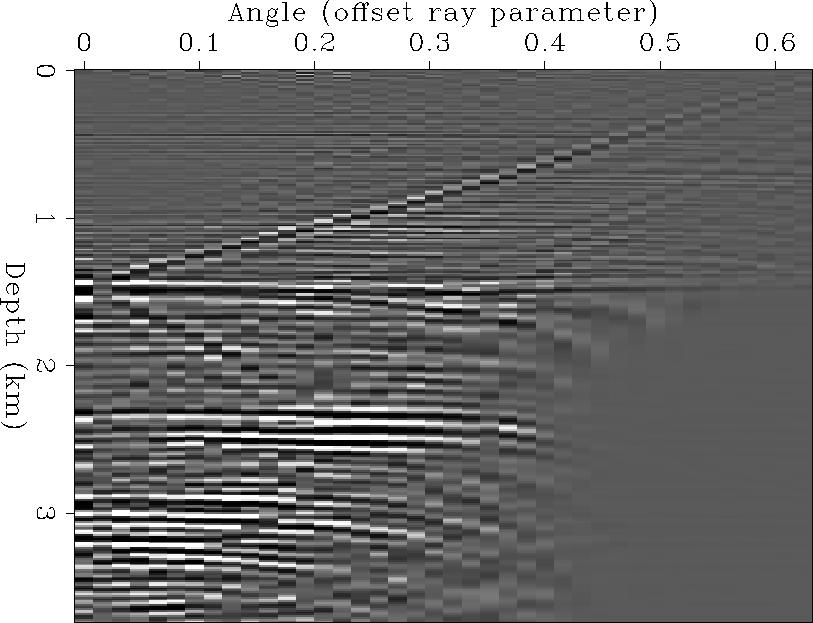
angle axis. Figure 15 shows the angle gather
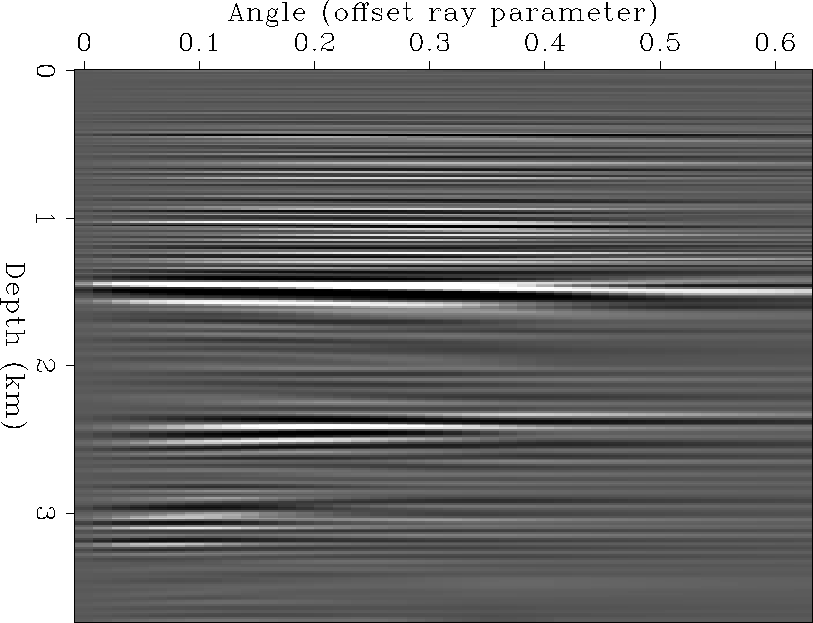
that results from migration. Figure 16 is the
angle gather after 3 iterations of preconditioned inversion.
The preconditioned result is lower frequency and smoothes energy
all across the gather, but it is possible to see where the true
events end on the preconditioned results. This shows where the
linear operator  from equations (1) and (2)
stops operating and where the preconditioner
from equations (1) and (2)
stops operating and where the preconditioner  takes over.
The events change in character as they are smoothed across angles
where our survey geometry does not provide large angle information.
takes over.
The events change in character as they are smoothed across angles
where our survey geometry does not provide large angle information.
mig.ang
Figure 15 Migrated angle gather
|
|  |
prec.ang
Figure 16 Angle gather after 3 iterations
of preconditioned inversion
|
|  |
Next: Conclusions and plans
Up: Results
Previous: Synthetic data
Stanford Exploration Project
4/29/2001