


 |


One of the best uses of the tool described in this paper is representing both the velocity model and the seismic section in the image. Fig. 3 represents the velocity model (chrominance), Fig. 4 the seismic section, and Fig. 7 the result of applying the above described algorithm to the two images. Operator M consisted in this case of a histogram equalization for the luminance, then of a transformation to Y, I and Q through the components of the jet colormap (fig. 1).
|
chrominance_VEL
Figure 3 The velocity model (chrominance for Fig. 7) | 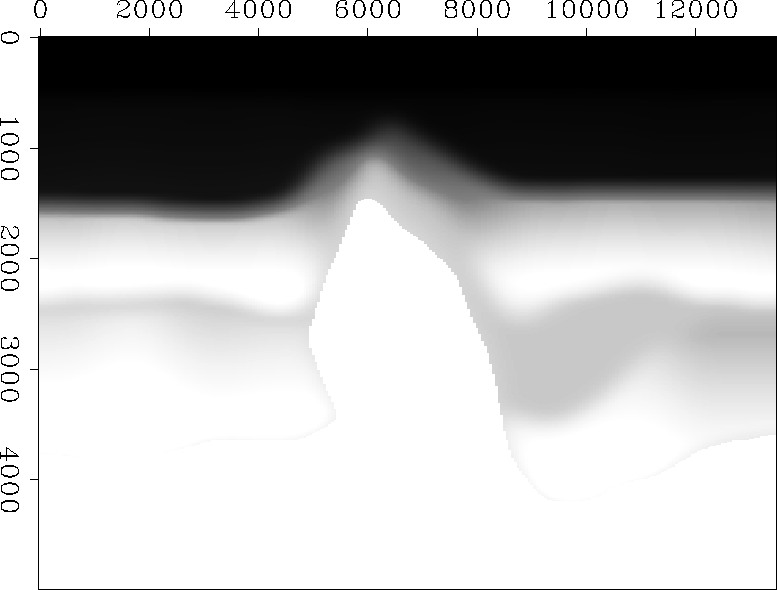 |
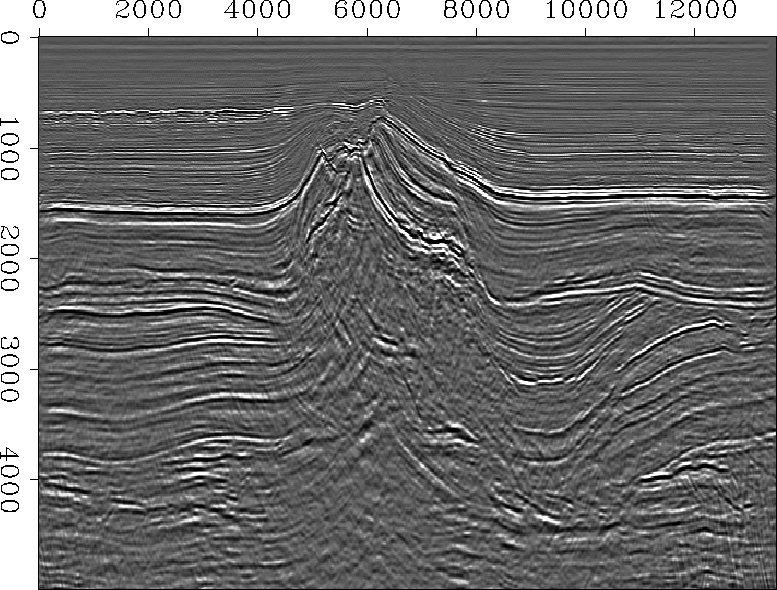 |
Dip fields, described in Fomel (2000) can be helpful in interpreting seismic data. Fig. 5 shows the value of the strongest dip in the corresponding point of Fig. 4, computed with the programs accompanying Fomel (2000). It is not easy to visually correlate the features in the two images. But when the dip field is used for chrominance, and the seismic image for luminance (with the operator M containing a 97 percent clip before applying jet colormap), the unconformities, as well as the areas with conflicting dips, become highly visible. (Fig. 8)
|
chrominance_DIP
Figure 5 Dip field of Fig. 4. This image will be used as chrominance for Fig. 8 | 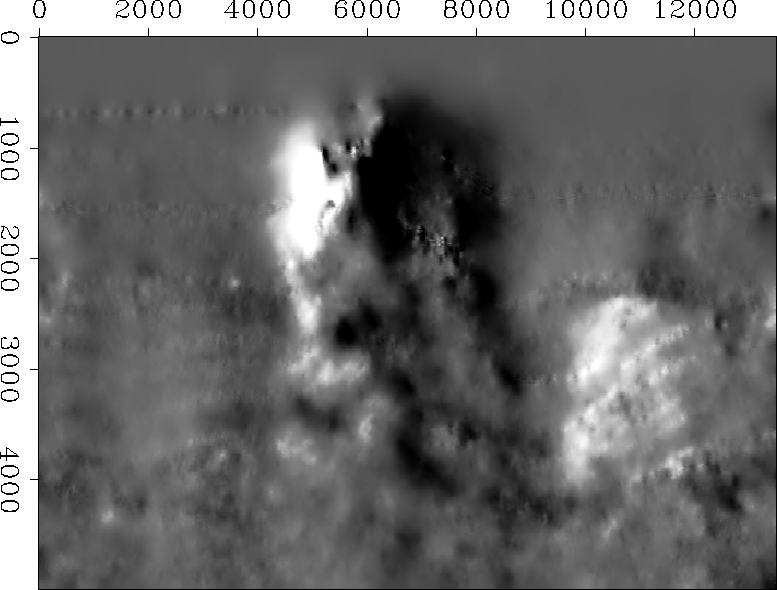 |