Next: Conclusions
Up: Haines et al.: Multiple
Previous: Example 2: A more
Our third example applies non-stationary PEF's to Gulf of Mexico
subsalt data (Figure ![[*]](http://sepwww.stanford.edu/latex2html/cross_ref_motif.gif) ). This Mississippi Canyon
2-D dataset was released by Western Geco in 1997 for the SEG multiples
workshop. Again we find that a
smoothed version of the PRT result provides a better model for signal
PEF estimation than the raw PRT result, and that the raw PRT multiple
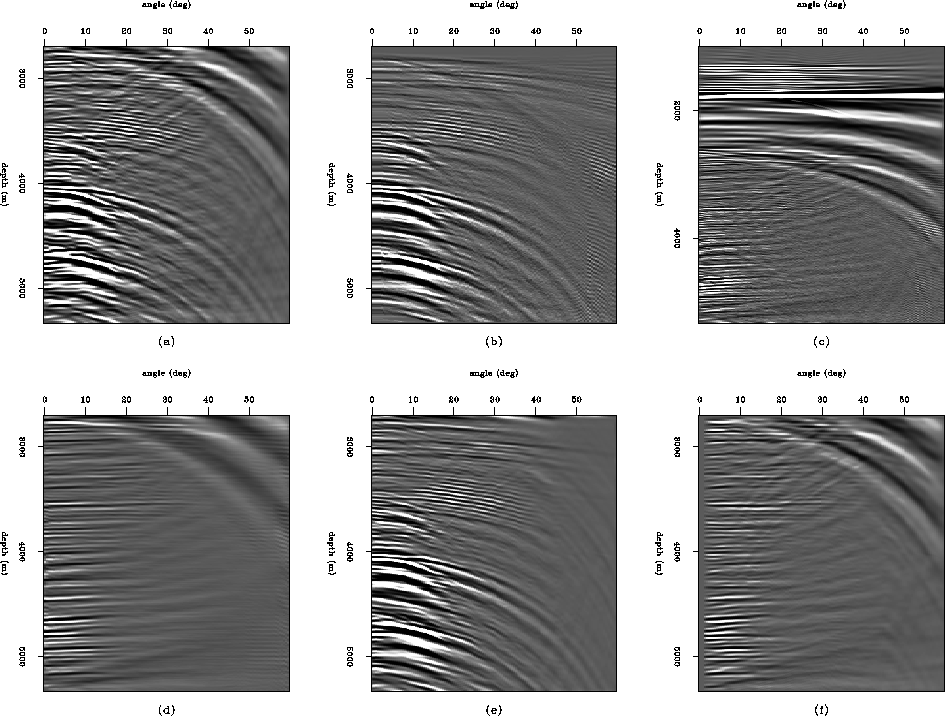
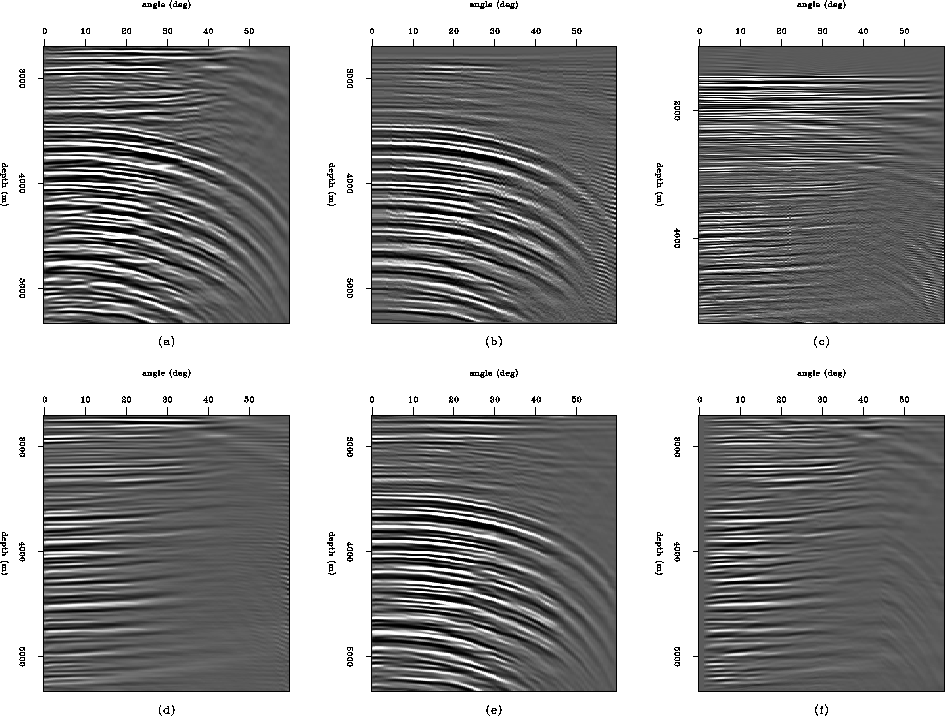
model provides a satisfactory noise PEF estimation model. Two angle
gathers are shown in Figures and
, from the salt area and from outside the salt
body, respectively. In both cases, the PEF result produces a cleaner final gather.
CIG2_gom_nice
). This Mississippi Canyon
2-D dataset was released by Western Geco in 1997 for the SEG multiples
workshop. Again we find that a
smoothed version of the PRT result provides a better model for signal
PEF estimation than the raw PRT result, and that the raw PRT multiple
model provides a satisfactory noise PEF estimation model. Two angle
gathers are shown in Figures and
, from the salt area and from outside the salt
body, respectively. In both cases, the PEF result produces a cleaner final gather.
CIG2_gom_nice
Figure 5 (a) Angle gather from offset of
12000 m (see Figure for reference), in the area of
the salt body. (b) Multiple model from PRT
approach, used as noise model for PEF approach. (c) Primary model from
PRT. (d) Smoothed version of (c), used as signal model for PEF
estimation. (e) Multiple model output by PEF approach. (f) Primary
model output by PEF approach.
![[*]](http://sepwww.stanford.edu/latex2html/movie.gif)


 CIG_gom_nice
Figure 6 (a) Angle gather from offset of
4000 m, in the sediments outside the salt body. (b) Multiple model from PRT
approach, used as noise model for PEF approach. (c) Primary model from
PRT. (d) Smoothed version of (c), used as signal model for PEF
estimation. (e) Multiple model output by PEF approach. (f) Primary
model output by PEF approach.
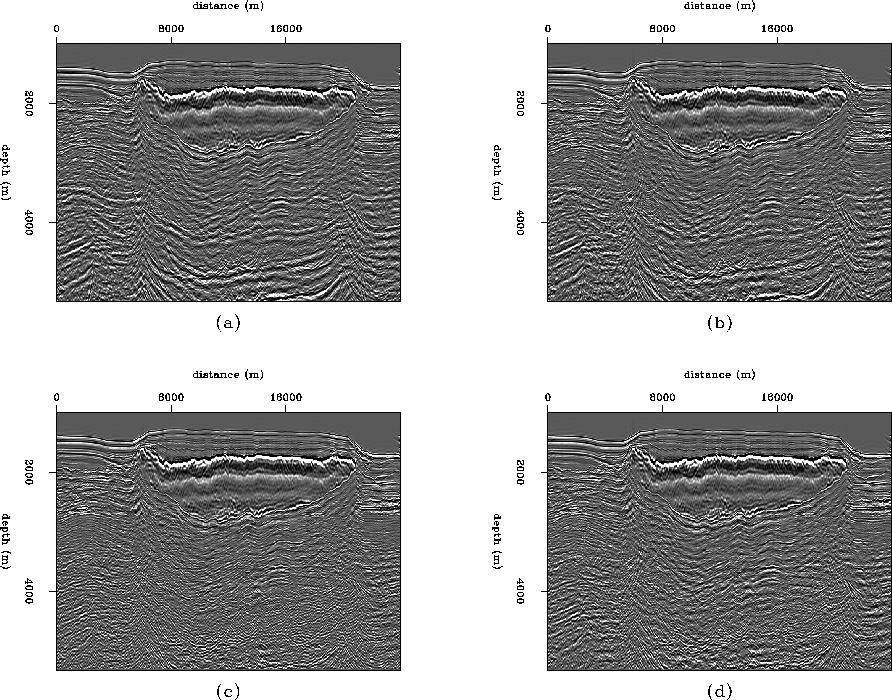
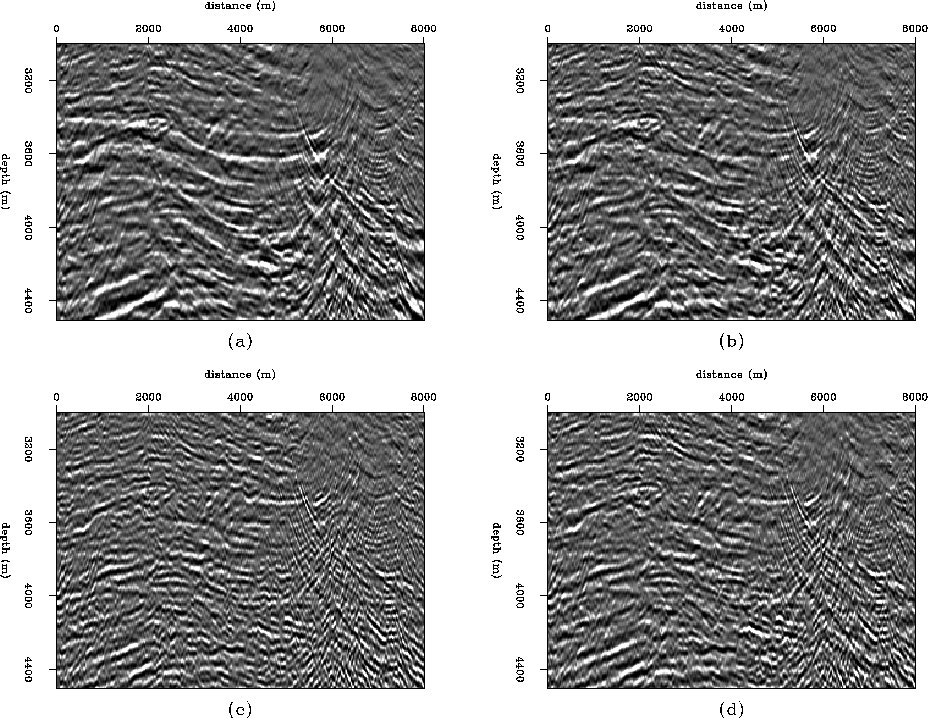
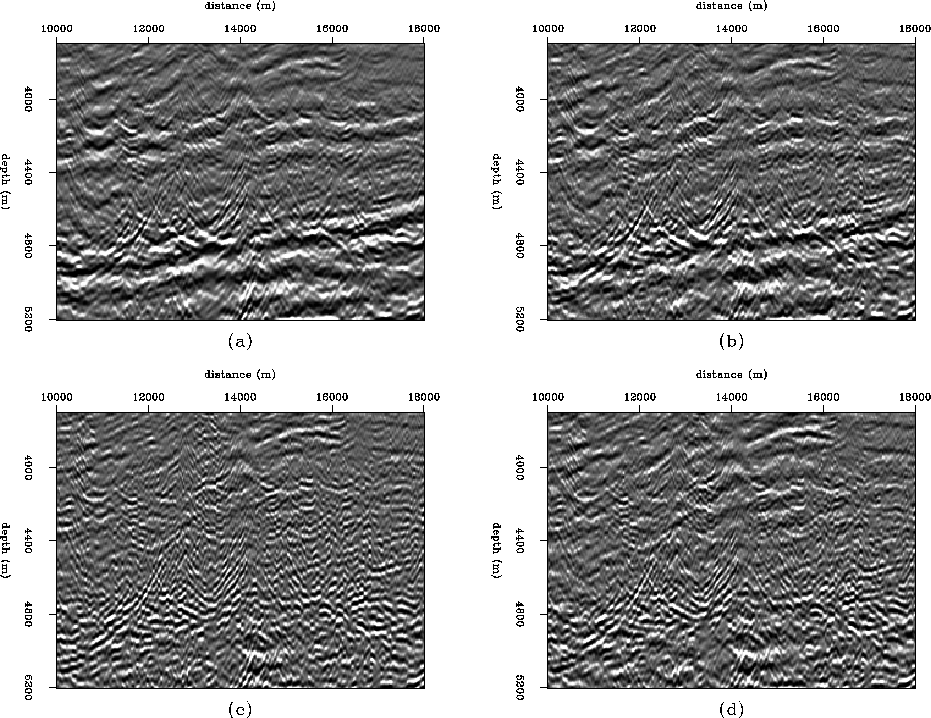
The stacked results (Figures , and
) illustrate the effectiveness of the PEF
technique. In addition to the raw data (Figures a, a and
a), the PRT result (Figures b, b and
b), and the PEF results described above (Figures d, d and
d), we include also the result attained using  as
the signal model (Figures c, c and
c). The PEF results are clearly better than the
raw stack, and also notably superior to the PRT result. The approach is quite effective in this case, particularly in terms
of maintaining higher frequency content of the data.
as
the signal model (Figures c, c and
c). The PEF results are clearly better than the
raw stack, and also notably superior to the PRT result. The approach is quite effective in this case, particularly in terms
of maintaining higher frequency content of the data.
gom_stack
Figure 7 (a) raw data. (b) Result from
muting in the PRT domain. (c) PEF result, using as the
signal model. (d) PEF result using smoothed version of PRT primary model as signal model.
gom_stackz1
Figure 8 Windows of various final stack
options, from beyond the margin of the salt body:
(a) raw data. (b) Result from muting in the PRT domain. (c) PEF
result, using as the signal model. Note higher frequency
content than any of the other stacks. (d) PEF result using
smoothed version of PRT primary model as signal model.
gom_stackz2
Figure 9 Windows of various final stack
options, from beneath the salt body:
(a) raw data. (b) Result from muting in the PRT domain. (c) PEF
result, using as the signal model. (d) PEF result using
smoothed version of PRT primary model as signal model.
Next: Conclusions
Up: Haines et al.: Multiple
Previous: Example 2: A more
Stanford Exploration Project
7/8/2003