


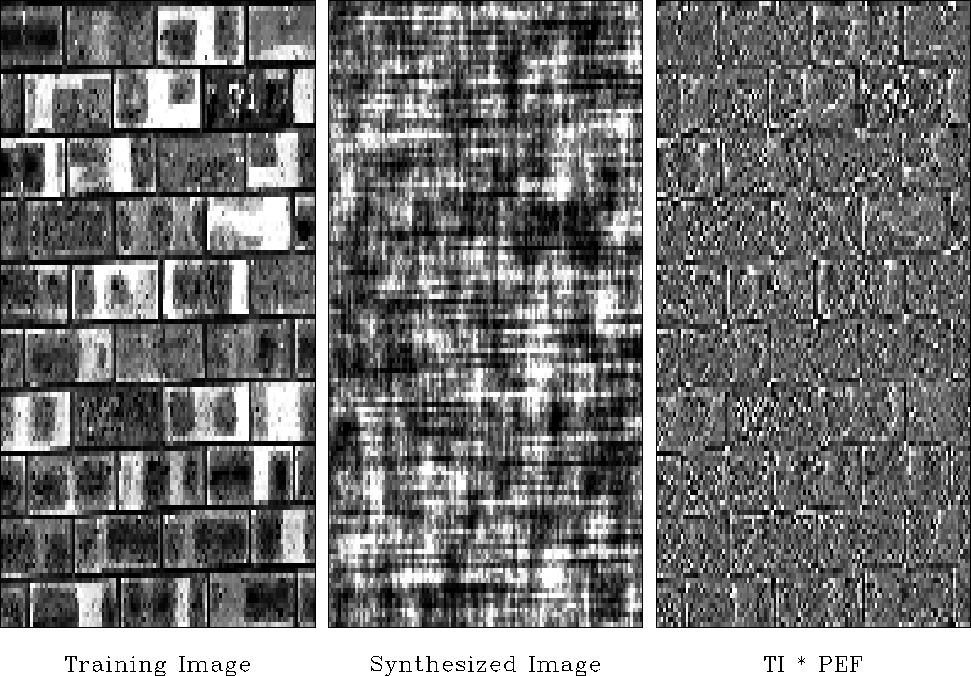
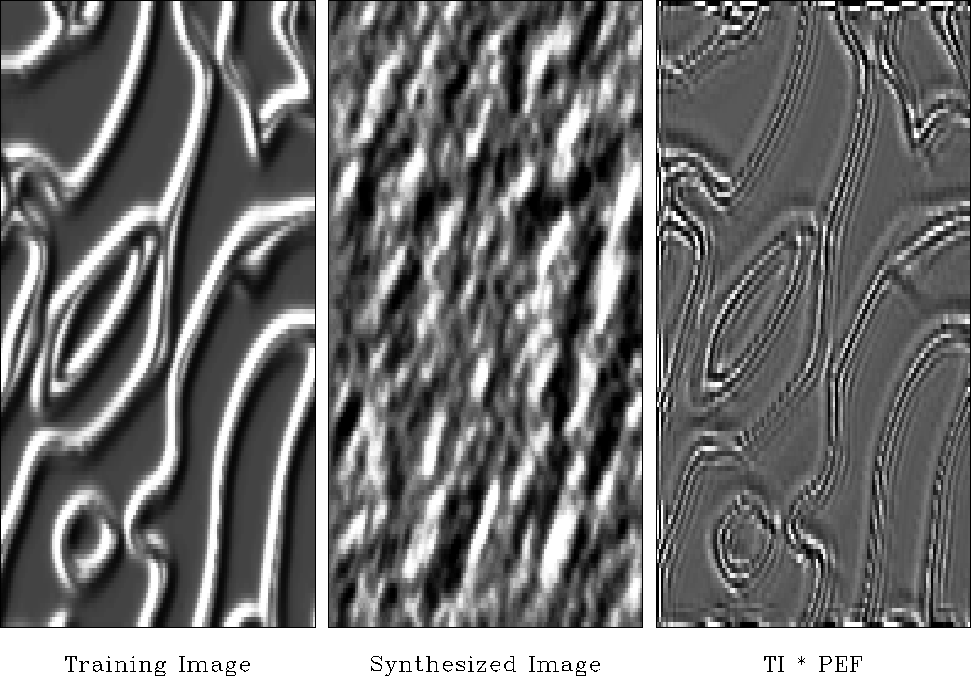
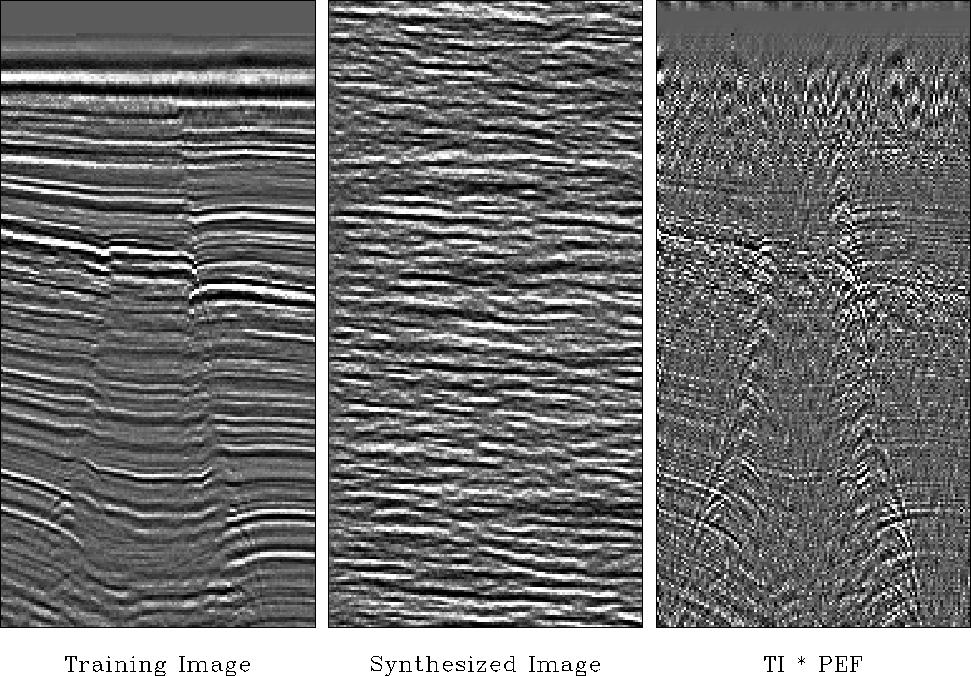
Here we examine elementary signal-processing applications of 2-D prediction-error filters (PEFs) on both everyday 2-D textures and on seismic data. Some of these textures are easily modeled with prediction-error filters (PEFs) while others are not. All figures used the same filter shape. No attempt was made to optimize filter size or shape or any other parameters.
Results in Figures
3-9
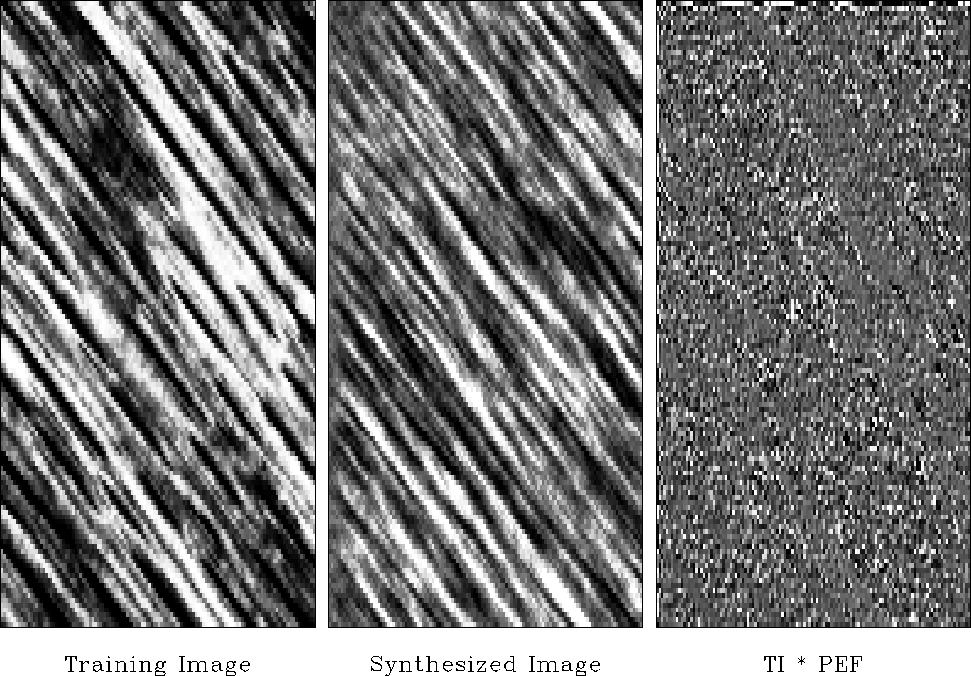
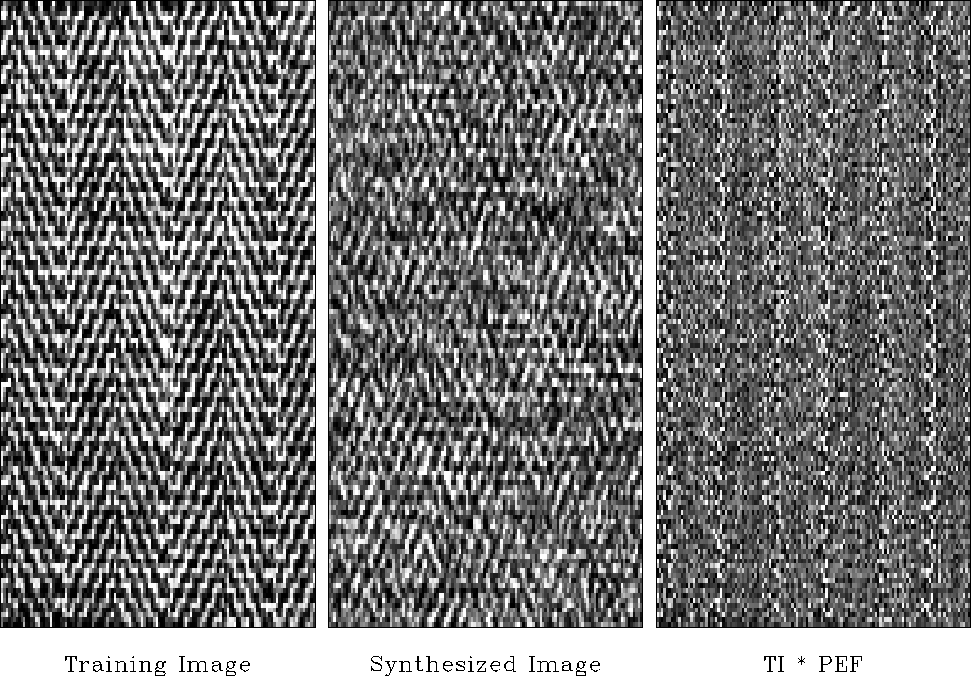
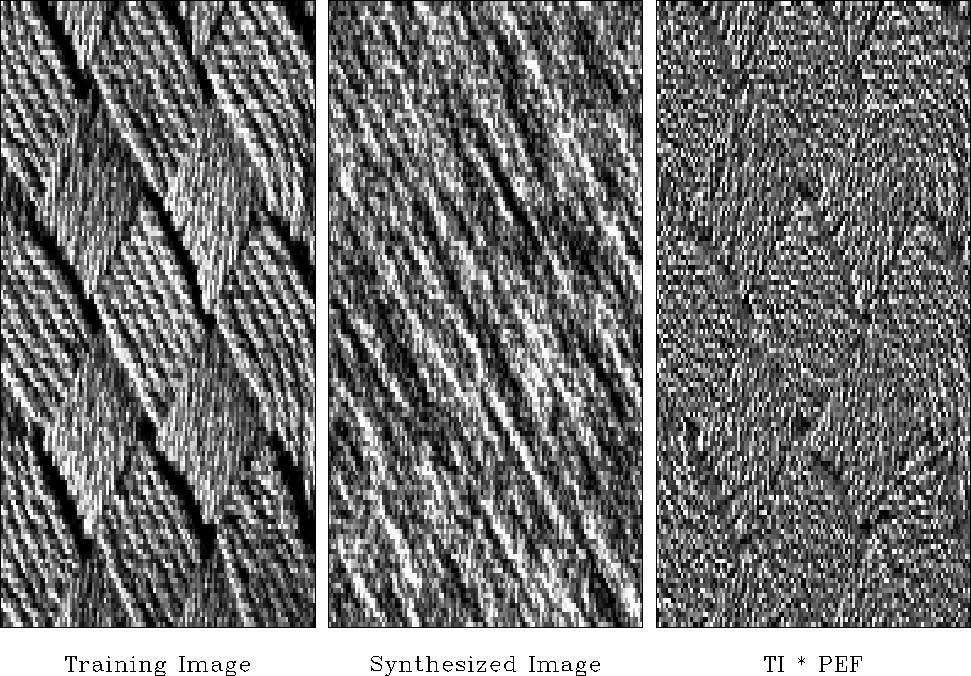
are shown with various familiar textures on the left
as training data sets.
From these training data sets,
a prediction-error filter (PEF) is estimated
using module pef ![[*]](http://sepwww.stanford.edu/latex2html/cross_ref_motif.gif) .
The center frame is synthetic data made by deconvolving
(polynomial division) random numbers by the estimated PEF.
The right frame is the more familiar process,
convolving the estimated PEF on the training data set.
.
The center frame is synthetic data made by deconvolving
(polynomial division) random numbers by the estimated PEF.
The right frame is the more familiar process,
convolving the estimated PEF on the training data set.
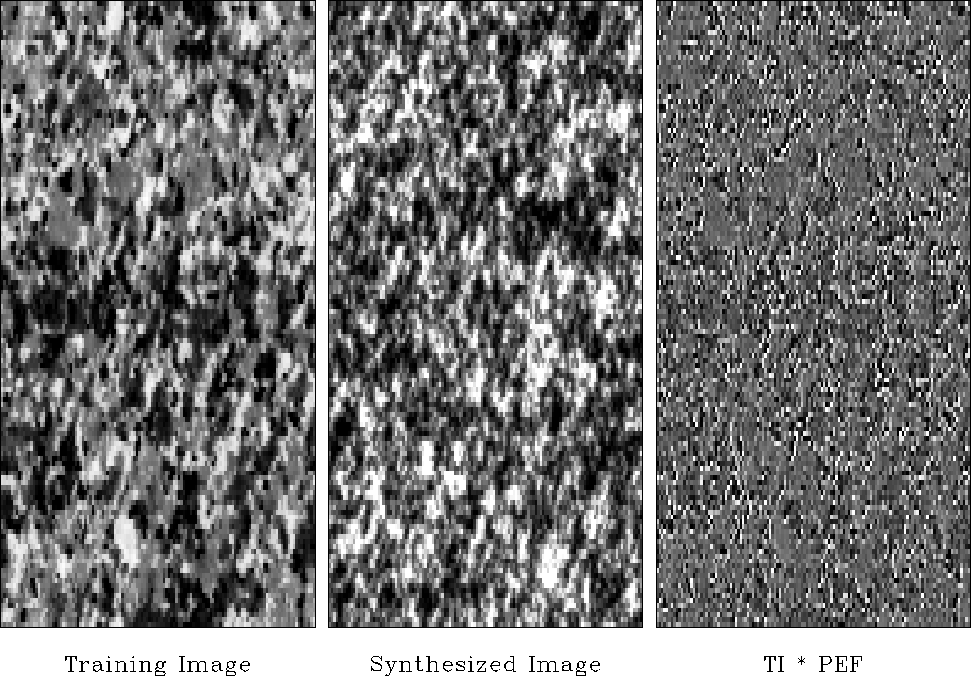 |


Theoretically, the right frame tends towards a white spectrum. Earlier you could notice the filter size by knowing that the output was taken to be zero where the filter is only partially on the data. This was annoying on real data where we didn't want to throw away any data around the sides. Now the filtering is done without a call to the boundary module so we have typical helix wraparound.
 |
 |
 |
 |
 |
 |
Since a PEF tends to the inverse of the spectrum of its input, results similar to these could probably be found using Fourier transforms, smoothing spectra, etc. We used PEFs because of their flexibility. The filters can be any shape. They can dodge around missing data, or we can use them to estimate missing data. We avoid periodic boundary assumptions inherent to FT. The PEF's are designed only internal to known data, not off edges so they are readily adaptible to nonstationarity. Thinking of these textures as seismic time slices, the textures could easily be required to pass thru specific values at well locations.