


The data set used for this study is a 2-D line acquired in the Canadian foothills. It has excellent signal quality and a very interesting complex structure. The similarity of nearby seismic lines, analysis of nearby wells, and success of 2-D prestack depth migration on nearby lines indicates that 3-D effects are minimal for this line.
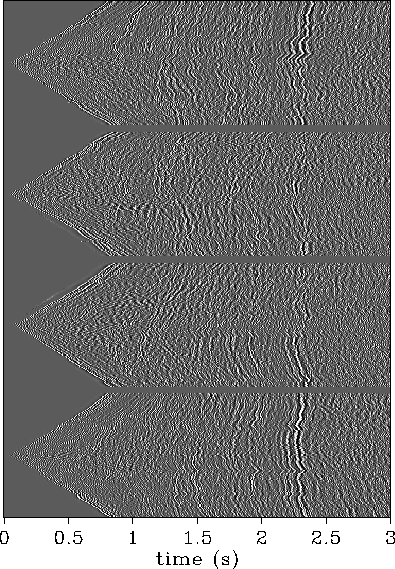
Four representative shot gathers from the data set are plotted in
Figure ![[*]](http://sepwww.stanford.edu/latex2html/cross_ref_motif.gif) . There are 144 shots with 300 groups per shot.
Shot and receiver spacing varies because of the rugged terrain, but the
nearest offset is at 60 m, average shot spacing is 100 m,
and average group spacing is 20 m. This results in 30 fold CMP coverage.
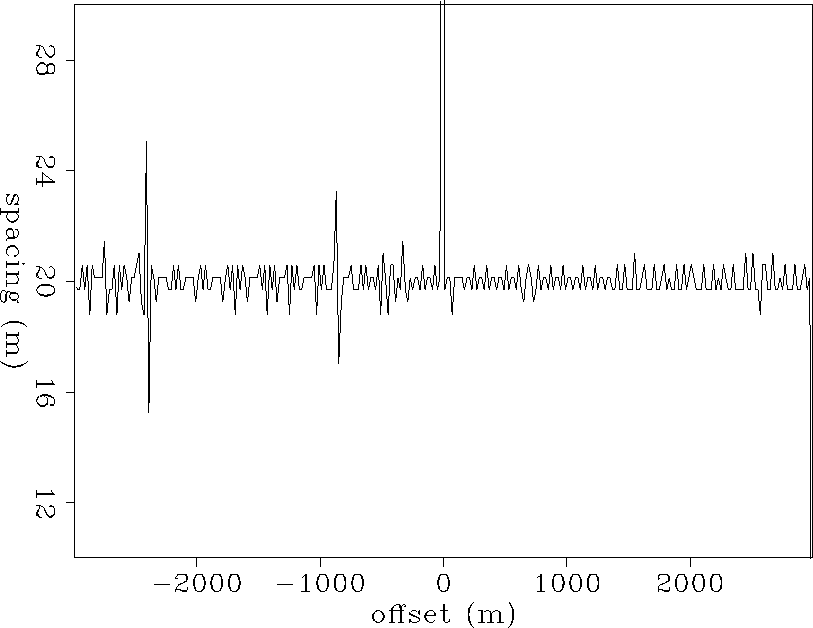
Figure is a representative plot of receiver interval for
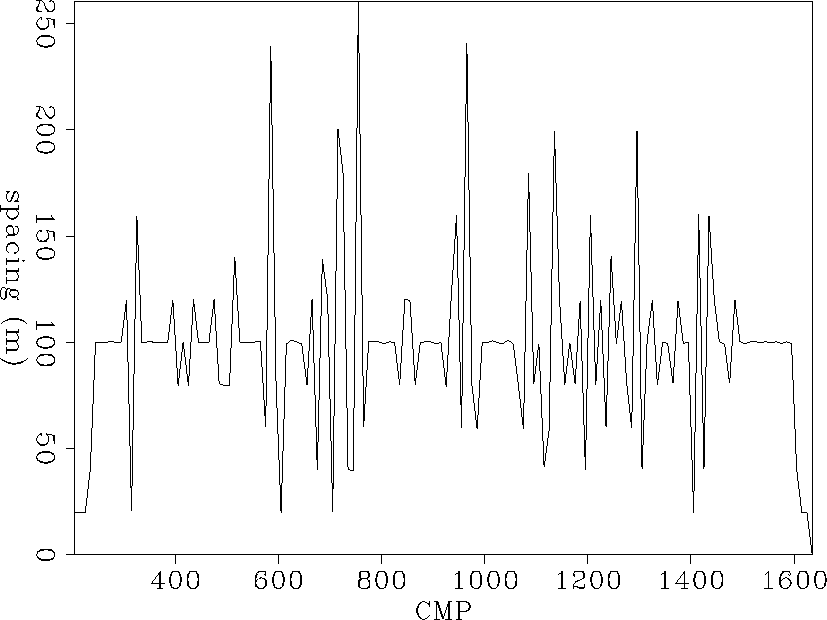
one shot gather, and Figure is a plot of shot spacing for
the entire line.
The receiver spacing is fairly regular, but the
shot spacing is more variable.
. There are 144 shots with 300 groups per shot.
Shot and receiver spacing varies because of the rugged terrain, but the
nearest offset is at 60 m, average shot spacing is 100 m,
and average group spacing is 20 m. This results in 30 fold CMP coverage.
Figure is a representative plot of receiver interval for
one shot gather, and Figure is a plot of shot spacing for
the entire line.
The receiver spacing is fairly regular, but the
shot spacing is more variable.
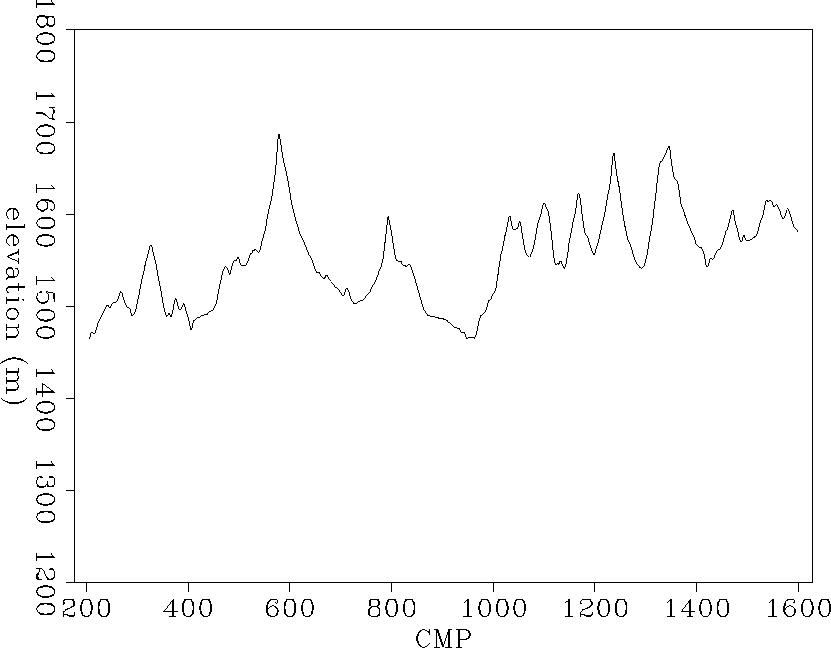
As shown in Figure ,
there is considerable topography along the line. The topography
varies in excess of 200 m. That, coupled with the high near-surface velocities,
makes this data set an excellent candidate for wave-equation datuming.
 |


 |
 |
 |