


All of the previous results were obtained using the exact Marmousi velocity model, but in a real exploration scenario the determined velocity model would generally be less detailed and less accurate.
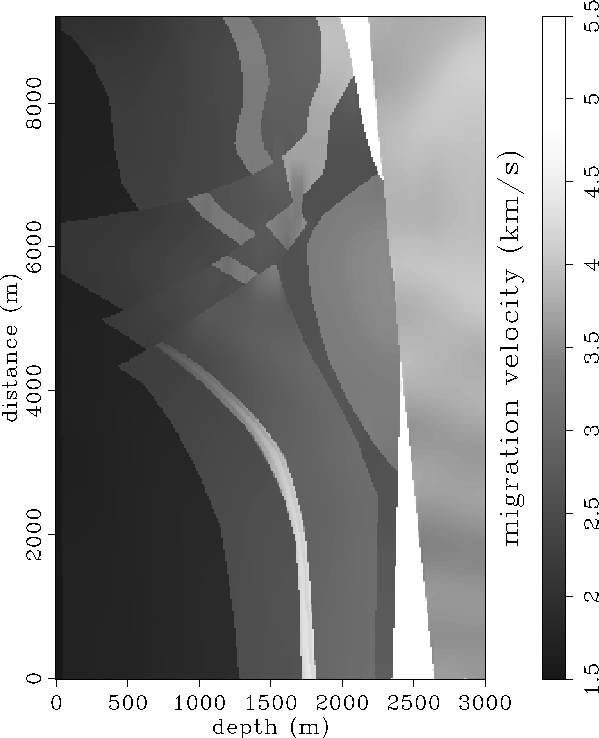
Figure ![[*]](http://sepwww.stanford.edu/latex2html/cross_ref_motif.gif) is an approximate model obtained by
defining the gross features of the true model and smoothing the
slowness within each of the defining regions.
This is the same model used by Nichols and it is intended to
to be a realistic representation of what an explorationist
might reasonably attain using geological information, velocity
estimation, and well information.
is an approximate model obtained by
defining the gross features of the true model and smoothing the
slowness within each of the defining regions.
This is the same model used by Nichols and it is intended to
to be a realistic representation of what an explorationist
might reasonably attain using geological information, velocity
estimation, and well information.
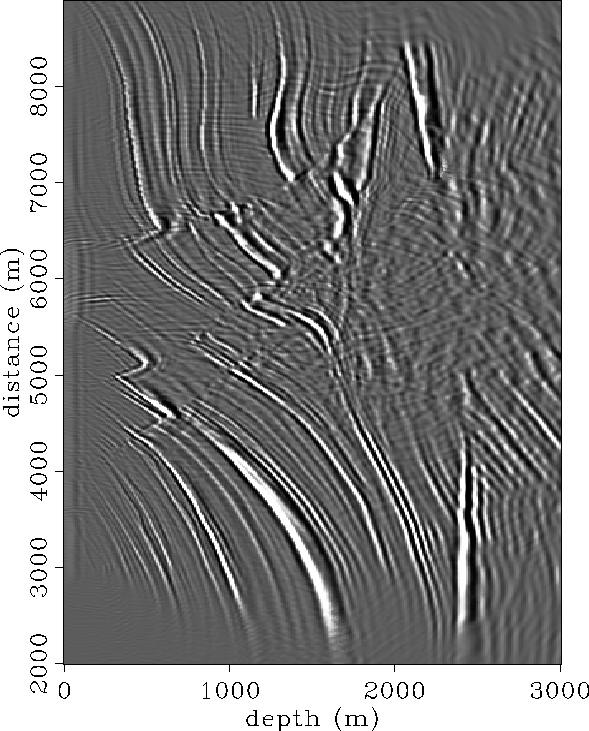
Figure is the result of standard Kirchhoff
migration with first-arrival traveltimes calculated from the
surface using the approximate velocity model. There is not too much
difference between this and the same migration using the actual
velocity model (Figure ).
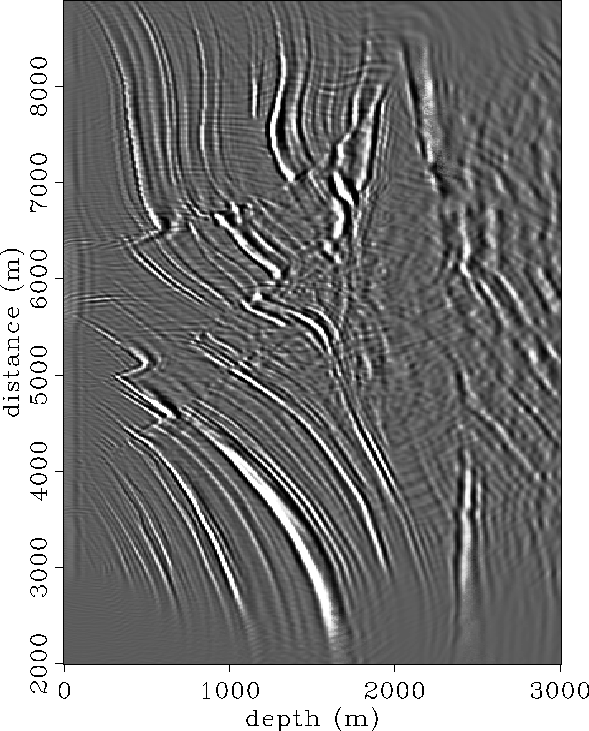
The result of layer-stripping Kirchhoff migration is presented in
Figure . The anticline and target structure is imaged,
but not as well as with the actual velocity model (Figure ).
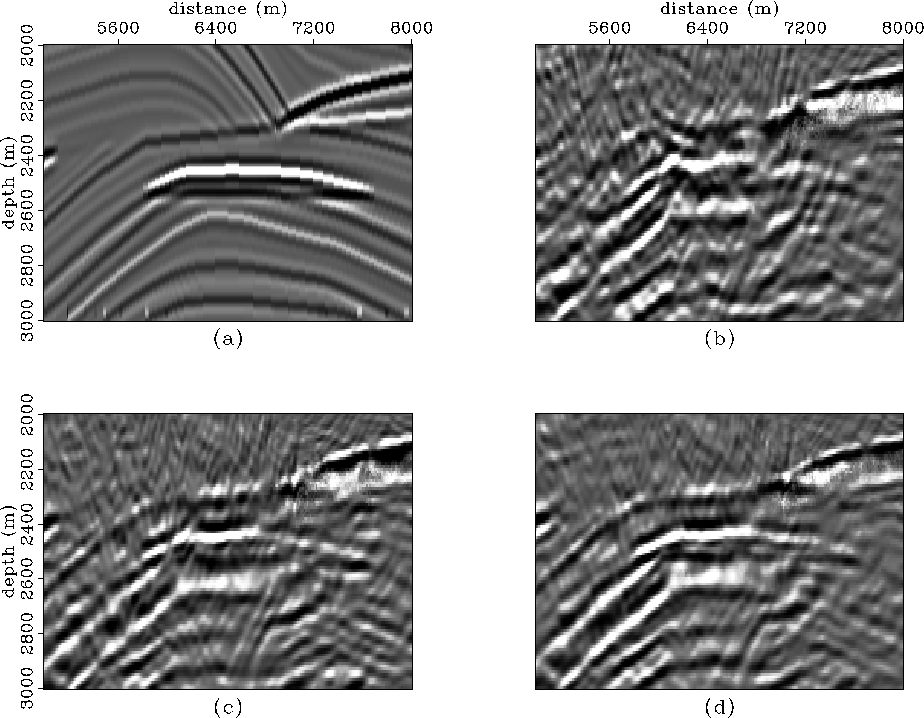
Figure is a comparison of the target zone images generated
with the approximate velocity and the actual velocity.
Although the image obtained with the exact velocity is superior, the one
obtained with the approximate velocity is surprisingly good. All the
relevant features of the target are imaged, even though the lateral
coherency and structural definition are not as good as when the
actual velocity is used. This shows that
although the method is sensitive to velocity, it still produces a
good image which could be improved by a refinement of the velocity model.
 |


 |
.
Compare to Figure . Movie.
![[*]](http://sepwww.stanford.edu/latex2html/movie.gif)
 |
.
The lower part of the image was obtained by migrating data which
was redatumed to a depth of 1500 m in three steps of 500 m each.
Compare to Figure . Movie.
 |
,
(c) the image after downward continuation to 1500 m in one step
with the true velocity of Figure , and
(d) the image after downward continuation to 1500 m in three
steps of 500 m each with the true velocity of
Figure . Movie.