


In Chapter ![[*]](http://sepwww.stanford.edu/latex2html/cross_ref_motif.gif) and
Chapter
we filled empty bins
by minimizing the energy output from the filtered mesh.
In each case there was arbitrariness in the choice of the filter.
Here we find and use the optimum filter, the PEF.
and
Chapter
we filled empty bins
by minimizing the energy output from the filtered mesh.
In each case there was arbitrariness in the choice of the filter.
Here we find and use the optimum filter, the PEF.
The first stage is that of the previous section,
finding the optimal PEF while
carefully avoiding using any regression equations
that involve boundaries or missing data.
For the second stage, we take the PEF as known and
find values for the empty bins so that
the power out of the prediction-error filter is minimized.
To do this we find missing data with
module mis2() .
This two-stage method avoids the nonlinear problem we would otherwise face if we included the fitting equations containing both free data values and free filter values. Presumably, after two stages of linear least squares we are close enough to the final solution that we could switch over to the full nonlinear setup described near the end of this chapter.
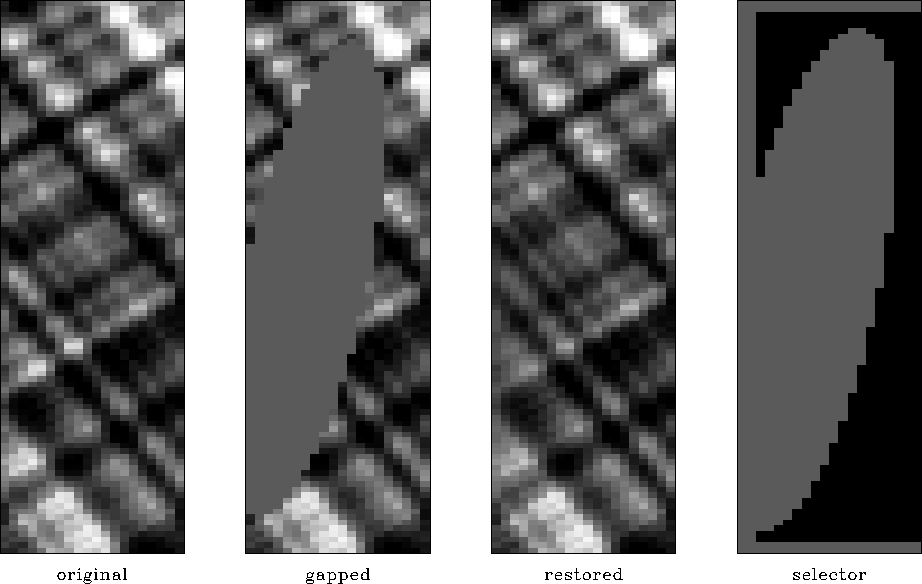
The synthetic data in Figure 14 is a superposition of two plane waves of different directions, each with a random (but low-passed) waveform. After punching a hole in the data, we find that the lost data is pleasingly restored, though a bit weak near the side boundary. This imperfection could result from the side-boundary behavior of the operator or from an insufficient number of missing-data iterations.
 |
![[*]](http://sepwww.stanford.edu/latex2html/movie.gif)


The residual selector in Figure 14 shows where the filter output has valid inputs. From it you can deduce the size and shape of the filter, namely that it matches up with Figure 10. The ellipsoidal hole in the residual selector is larger than that in the data because we lose regression equations not only at the hole, but where any part of the filter overlaps the hole.
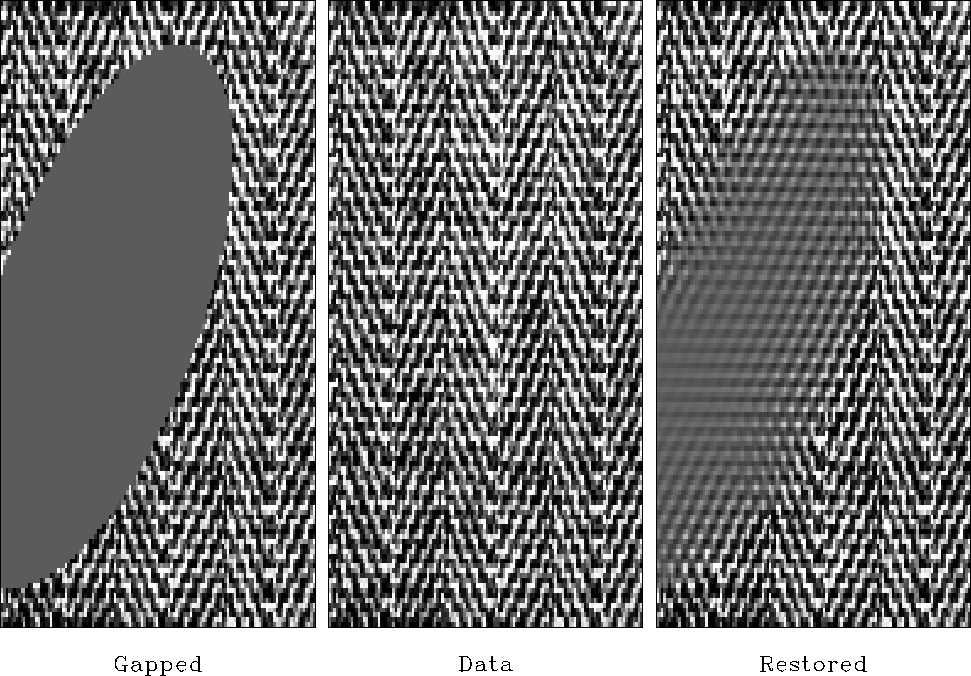
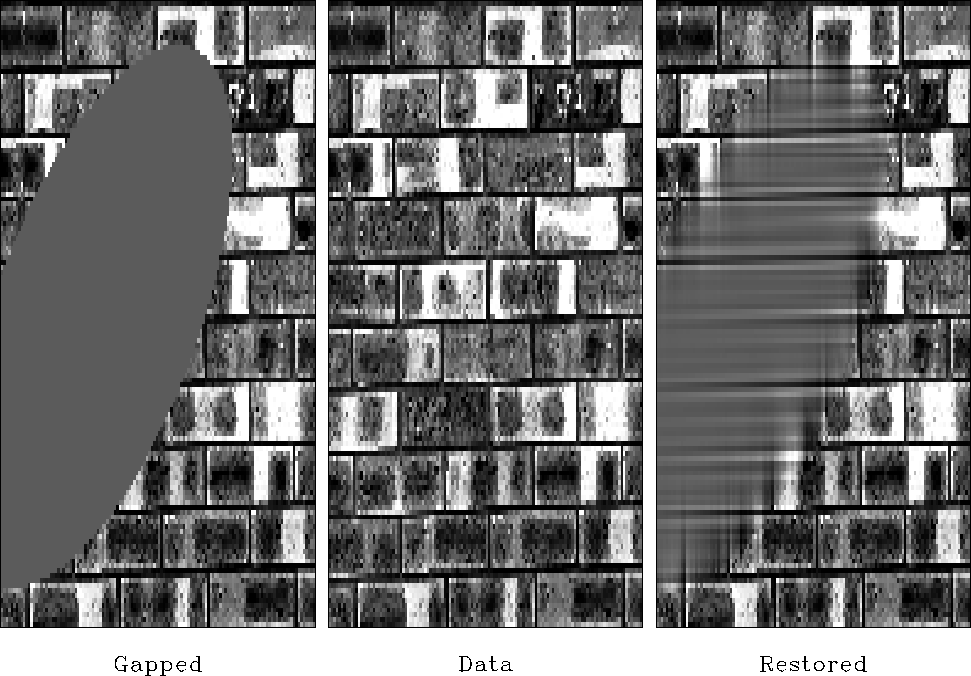
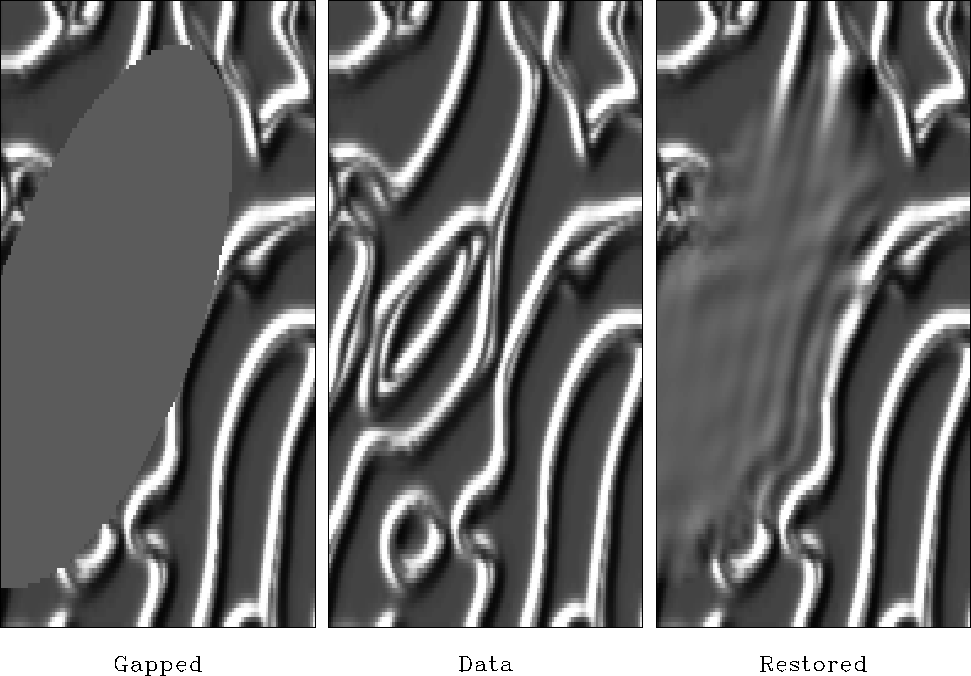
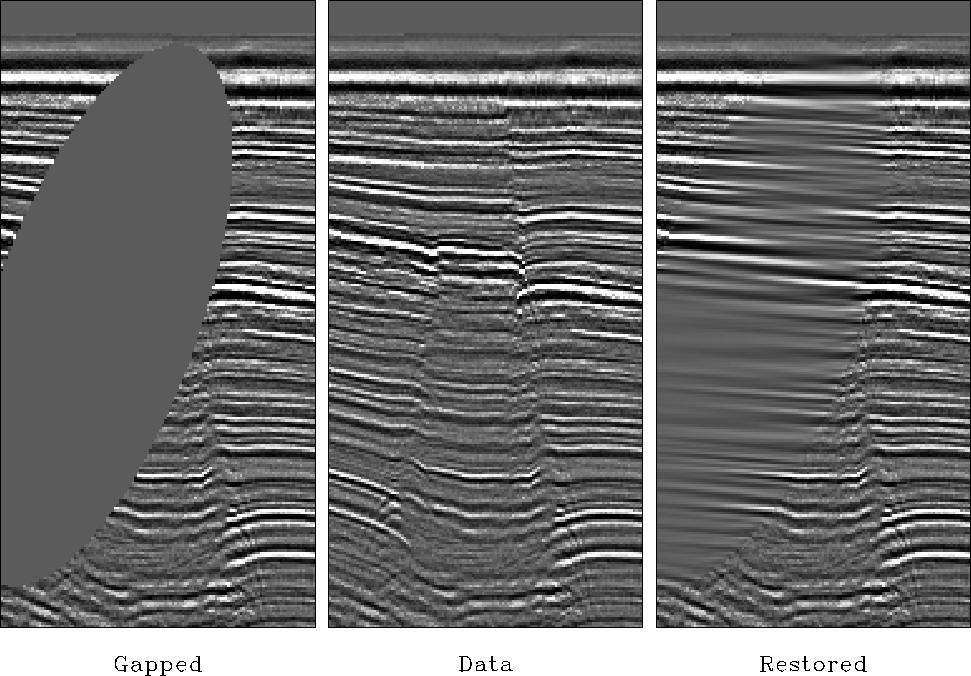
The results in Figure 14 are essentially perfect representing the fact that that synthetic example fits the conceptual model perfectly. Figures 15-18 show real data of various kinds.
 |
 |
 |
 |