


For a simple 1-D test, I chose the function shown in
Figure ![[*]](http://sepwww.stanford.edu/latex2html/cross_ref_motif.gif) , but sampled at irregular locations. To create two
different regimes for the inverse interpolation problem, I chose 50
and 500 random locations. The two sets of points were interpolated to
500 and 50 regular samples respectively. The first test corresponds to
an under-determined situation, while the second test is clearly
over-determined. Figures and show the
input data for the two test after normalized binning to the selected
regular bins.
, but sampled at irregular locations. To create two
different regimes for the inverse interpolation problem, I chose 50
and 500 random locations. The two sets of points were interpolated to
500 and 50 regular samples respectively. The first test corresponds to
an under-determined situation, while the second test is clearly
over-determined. Figures and show the
input data for the two test after normalized binning to the selected
regular bins.
|
bin500
Figure 29 50 random points binned to 500 regular grid points. The random data are used for testing inverse interpolation in an under-determined situation. | 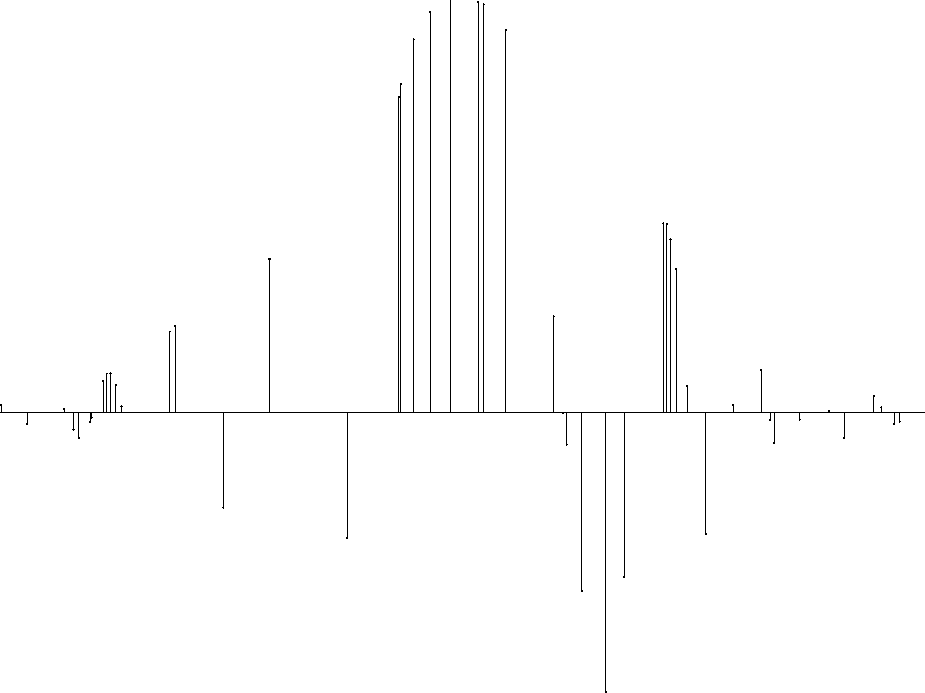 |


|
bin50
Figure 30 500 random points binned to 50 regular grid points. The random data are used for testing inverse interpolation in an over-determined situation. | 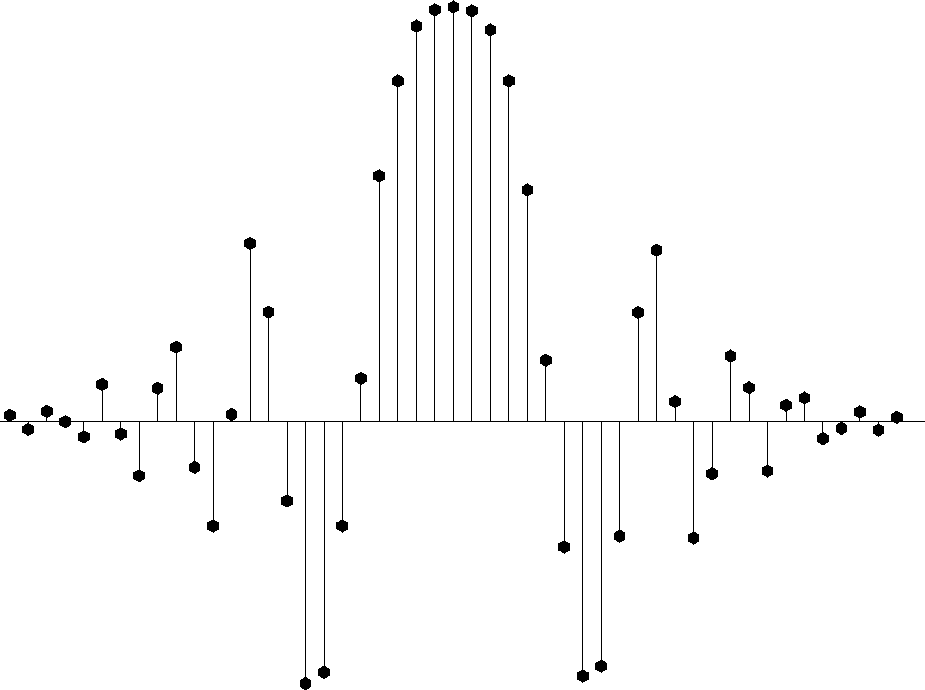 |
I solved system (19)-(25) by the iterative
conjugate-gradient method, utilizing a recursive filter
preconditioning Fomel (1997a) for faster convergence.
The regularization operator  was constructed by using the
method of the previous subsection with the tension-spline differential
equation Fomel (2000b); Smith and Wessel (1990) and the
tension parameter of 0.01.
was constructed by using the
method of the previous subsection with the tension-spline differential
equation Fomel (2000b); Smith and Wessel (1990) and the
tension parameter of 0.01.
The least-squares differences between the true and the estimated model
are plotted in Figures and .
Observing the behavior of the model misfit versus the number of
iterations and comparing simple linear interpolation with the
third-order B-spline interpolation, we discover that
|
norm500
Figure 31 Model convergence in the under-determined case. Dashed line: using linear interpolation. Solid line: using third-order B-spline. | 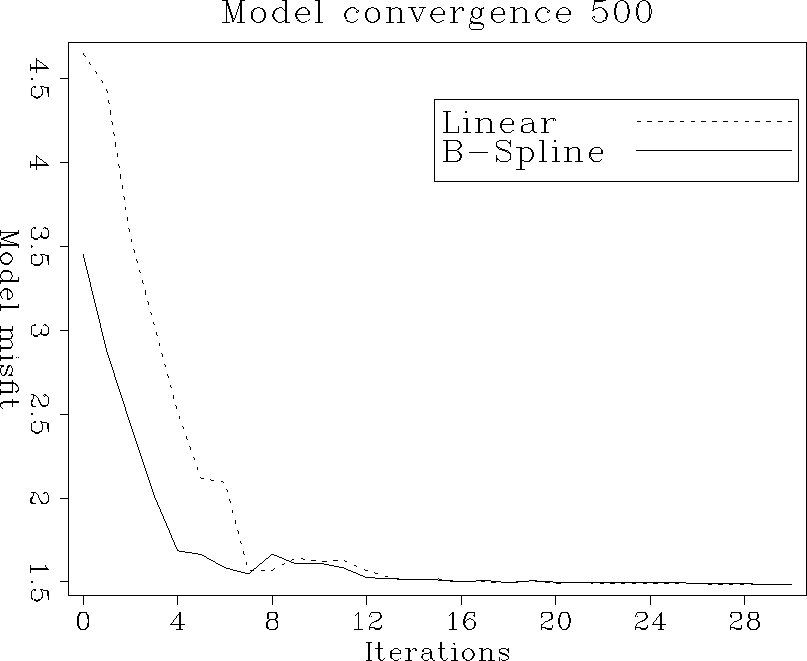 |
|
norm50
Figure 32 Model convergence in the over-determined case. Dashed line: using linear interpolation. Solid line: using third-order B-spline. | 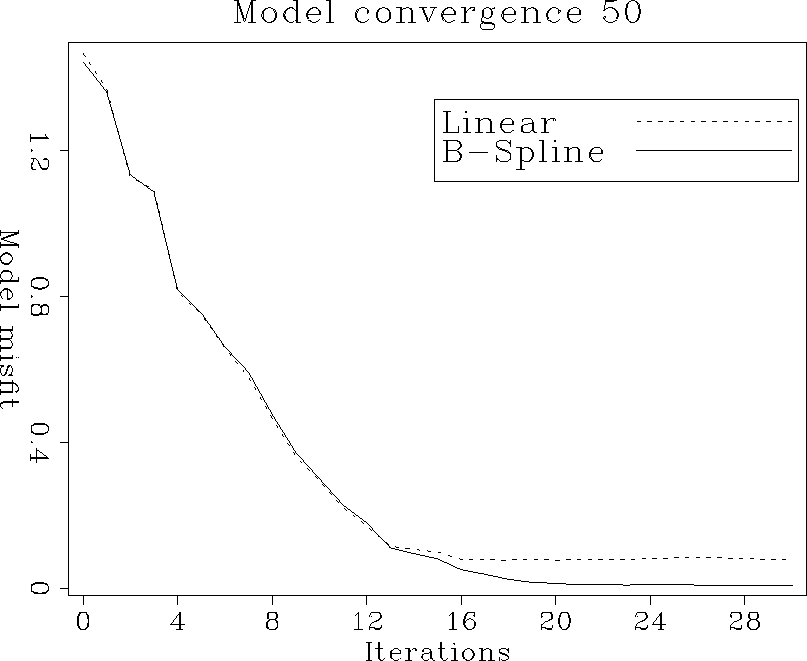 |